





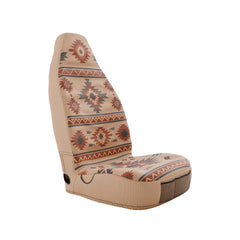
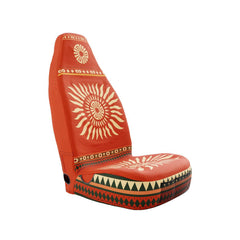

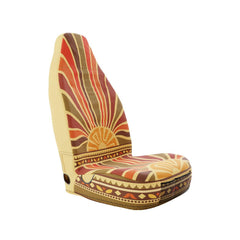



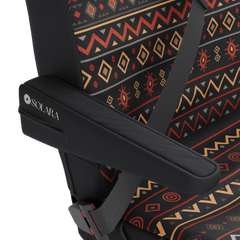


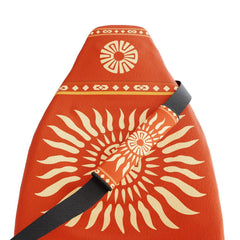



Quality universal-fit seat covers are airbag-compatible. Cheap covers without engineered seam stitching can prevent side airbag deployment in a crash. This is the most important safety spec when buying seat covers, and the one most likely to be skipped. Below: how side airbags actually work, the engineered seam that allows deployment, and which covers fail the safety test.
How side airbags deploy (the physics)
Side airbags in modern cars (1998+) are housed inside the front seat bolster. In a side-impact crash, an accelerometer detects the impact and triggers the airbag. The airbag inflates from inside the seat, breaking through the seat upholstery at a designed weak point: typically a seam.
The deployment process takes 15–25 milliseconds:
- Impact detected by side accelerometer
- Inflator fires
- Airbag inflates inside seat foam
- Inflating airbag pushes outward through the seat fabric
- Designed seam tears open
- Airbag deploys into space between occupant and door
- Cushions the occupant from impact
For this to work, the path from seat foam to deployment space must be unobstructed. If the seat is wrapped in a non-engineered cover, the cover can prevent the seam from tearing.
The engineered seam: how compatible covers work
Quality universal-fit covers have a seam at the bolster that's designed to leave the side airbag free to deploy.
The engineering:
- Seam is sewn with a specific stitch density
- Thread strength is calibrated to break at the airbag's deployment force
- Seam location aligns with the seat's deployment seam
- The cover sits flat over the bolster, so nothing bunches over the seam
The result: when the airbag deploys, it pushes through the engineered cover seam in the same way it pushes through the seat seam, without obstruction.
Aftermarket covers that FAIL the airbag test
Cheap or improperly designed covers fail in three ways:
1. No engineered seam at all
The cover is a continuous wrap with no designed weak point at the bolster. The airbag pushes against the cover but the cover holds. Deployment is delayed or fails entirely.
How to spot: look at the side of the cover where it goes around the seat bolster. If you see a continuous fabric panel with no visible seam at the bolster line, it's not engineered.
2. Wrong seam strength
The cover has a seam, but the thread is too strong. The airbag can't tear through quickly enough. Deployment is delayed by milliseconds: a critical interval in a high-speed crash.
How to spot: harder to identify visually. Check whether the product page describes an airbag-friendly seam and where it sits on the seat.
3. Heavy material (faux leather, vinyl, thick canvas)
Even with a seam, very thick materials resist the airbag's outward force. PVC and PU faux leather covers are particularly suspect: the coating's tensile strength is high.
How to spot: if the cover is faux leather and the seller doesn't explicitly state airbag compatibility (with engineered seams cut into the leather), assume it's NOT compatible.
Are Solara covers airbag-safe?
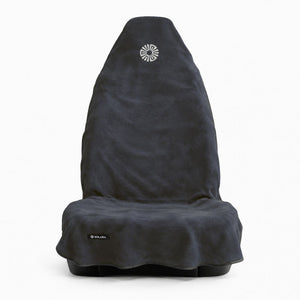
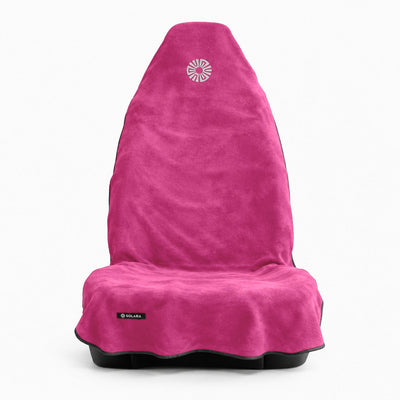
Solara's single seat covers have an airbag-friendly side seam, designed so the cover doesn't hold back a seat-mounted side airbag.
What that means in practice:
- The side seam sits along the outer edge of the seat, where seat-mounted side airbags deploy
- The seam only works when the cover sits correctly, so line it up with the outer bolster
- Never put a second cover, blanket or towel over the bolster
- If your car's manual advises against seat covers on a seat with an airbag, follow the manual
No aftermarket cover carries a vehicle safety certification such as FMVSS 208; that certification applies to the vehicle, not to accessories. What matters for a cover is that the seam over the bolster leaves the airbag free.
Front airbags: steering wheel and dashboard (covers don't affect these)
A common confusion: front airbags vs. side airbags.
Front airbags are housed in the steering wheel (driver) and dashboard (passenger). Seat covers don't affect them at all: covers don't touch the steering wheel or dash.
Side airbags are in the seat bolster (most modern cars) or door panel (some older cars). Cover compatibility matters for the seat-mounted ones.
Side curtain airbags are in the roof rail. Covers don't affect these.
If your car has only front airbags (very old cars without side airbags), seat covers don't pose any deployment risk. Most cars 2000+ have side airbags in the seat: that's the case where compatibility matters.
How to use Solara covers on seats with side airbags
Three steps:
1. Check the seat
Look for the airbag label on the outer side of the seat, and check your car's manual for any advice about seat covers.
2. Line up the seam
Install the cover so the airbag-friendly side seam sits along the outer bolster, then smooth the fabric so nothing bunches over it.
3. Keep the bolster clear
Don't add anything on top of the cover at the bolster. A second cover, a blanket or a towel defeats the point of the seam.
We don't claim a regulatory certification, because no such certification exists for aftermarket seat covers. We describe exactly what the cover has: an airbag-friendly side seam.
The verification checklist for buyers
Before buying any cover, verify:
1. Seller explicitly states airbag compatibility.
Look for the phrase "airbag-compatible," "engineered seam," or "side-airbag tested" on the product page. Vague claims like "fits airbag-equipped vehicles" without engineering specifics are suspect.
2. Brand has reputation for safety engineering.
Look for a brand that states airbag compatibility clearly on the product page. No-name sellers often don't mention it at all.
3. Reviews mention airbag function.
Some buyer reviews specifically mention checking compatibility with their car. If reviews don't mention safety, you can't verify.
4. Visual inspection of the cover.
Once you have the cover, look at the bolster: is there a visible engineered seam? If not, you've potentially bought a non-compatible cover.
5. If in doubt, return.
A clear return policy lets you send back an unused cover that doesn't pass your inspection. Solara's window is 14 days from delivery.
What to avoid
- Cheap covers under $30 with no compatibility statement
- Faux leather covers without specific airbag-engineered seams
- Heavy canvas covers without airbag-specific cutting
- "One-size-fits-all" continuous fabric wraps (no visible bolster seam)
- Sellers who don't respond to airbag-compatibility questions
FAQ
Will my car's airbag warning light come on if I install covers?
Quality covers don't trigger the airbag system. The system has weight sensors in the seat, not pressure sensors against the cover. Covers add minimal weight.
Are kids' booster seats compatible with covers?
Yes. Booster seats sit on top of covers without affecting airbag function. The cover doesn't change booster installation.
What about cars without side airbags (older vehicles)?
If your car has no side airbags, cover compatibility doesn't matter for safety. Universal covers work without any airbag concerns.
Will the cover affect my side curtain airbag (roof-mounted)?
No. Side curtain airbags deploy from the roof rail, not the seat. Covers don't affect them.
Can I install covers on a car with only front airbags?
Yes: covers are completely safe in this case. Front airbags don't interact with seat covers.
What if I'm in an accident with non-compatible covers?
The airbag may deploy with delayed timing or fail to deploy. The injury risk in a side-impact crash increases significantly. This is the practical reason airbag compatibility matters.
Which Solara covers have the airbag-friendly side seam?
The Solara single seat covers have it. If a seat you plan to cover with a double front seat cover has a seat-mounted side airbag, check your vehicle manual first.
Verdict
Buy only covers explicitly marketed as airbag-compatible with engineered seams. This is non-negotiable for any car with side airbags (most cars 2000+). Skipping this check is the most dangerous mistake in seat cover buying.
For Solara covers specifically: the single seat covers have an airbag-friendly side seam, and every cover is designed to protect against wear, stains and aging without getting in the way of your car's safety systems.
If you've already bought covers without verifying airbag compatibility, inspect them for an engineered seam at the bolster. If there's no seam, replace before continuing to drive, especially for the front seats where side airbags deploy.


