



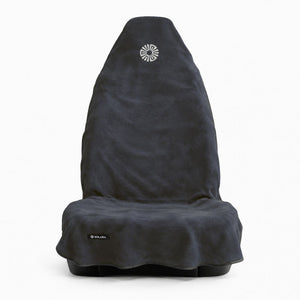


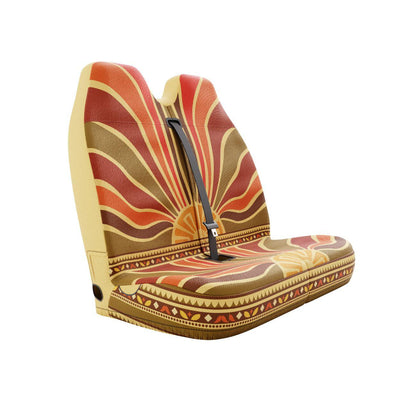

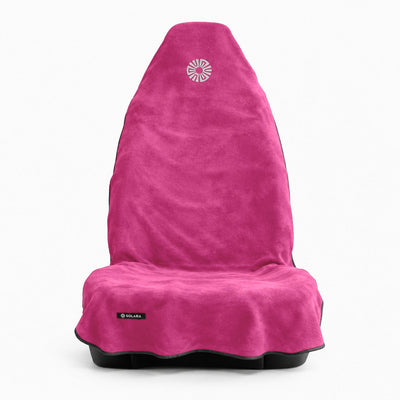
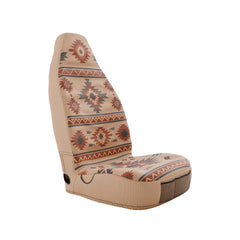
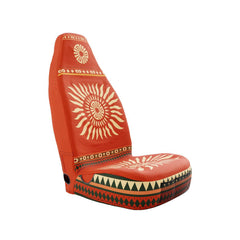

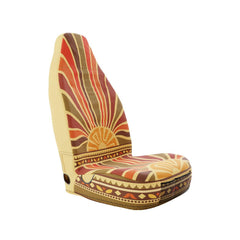





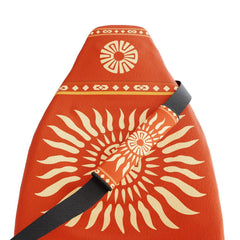



Universal-fit seat covers fit most cars. That isn't marketing fluff: it's what happens when you design covers around the common range of seat widths, depths and bolster shapes. The exceptions are documented and predictable. Below: the engineering behind universal fit, the specific seats that don't fit, and how to tell if your car is one of them.
What "universal fit" actually means (engineering version)
Universal-fit seat covers use four design principles to accommodate seat variation:
1. Stretch fabric. The fabric stretches in every direction, so one cover fits a range of seat sizes instead of one exact seat.
2. A deep tuck. The cover tucks deep into the seat crease. That tuck keeps it taut and stops it shifting, whatever the seat shape.
3. Airbag-friendly side seam. The seam at the side bolster leaves the side airbag free to deploy. This is what makes a universal cover airbag-compliant.
4. Headrest and seatbelt openings. Pre-cut openings accommodate standard headrest posts and seatbelt routing.
These four principles cover most seats in cars built since the mid-1990s. The variation in seat width, depth and contour falls within what a stretch cover can handle for the vast majority of passenger vehicles.
The seats that don't fit
Here's the honest list. If your vehicle is on it, universal-fit isn't the right answer.
1. Old work trucks with extra-wide bench seats and integrated belts
Specifically: pre-2009 GMC, Chevrolet, Ford, Dodge work trucks with full-bench front seats wider than 60 inches AND integrated front belts (belt comes out of the seat back, not the B-pillar).
The combination of extra width + integrated belt requires custom-cut covers. Standard universal bench covers max out at ~60 inches wide.
2. Some 3rd-row power-fold rear seats in luxury SUVs
Specifically: Mercedes GL/GLS, BMW X7, Cadillac Escalade ESV, Lincoln Navigator, and some 3rd-row Range Rover Sport configurations.
The motors and folding mechanism in the third row create unique geometries that standard universal covers don't accommodate. The 1st and 2nd rows fit fine; the 3rd row is the problem.
3. Aggressive race-style seats with deep side bolsters
Specifically: cars with Recaro Pole Position, Sparco Evo, OEM race seats (Porsche 911 GT2 RS, Mustang Shelby GT350R, Civic Type R, etc.).
The deep side bolsters exceed universal-fit tolerances by 2–4 inches. The cover would either stretch too tightly (preventing airbag deployment) or bunch dramatically.
4. Seats with integrated child boosters
Specifically: certain Volvo XC90, XC60, V90 trims with the optional integrated booster cushion. Some Audi A4/A6 wagon trims have integrated boosters.
The booster mechanism in the seat creates a non-standard cushion geometry. Custom covers cut around the booster work; universal does not.
5. Rare oversized seats in custom commercial vehicles
Specifically: ambulances, fire trucks, custom commercial conversions with seats wider than 24 inches or with proprietary anchoring systems.
These vehicles need bespoke covers, not universal.
6. Seats with active ventilation requiring high airflow
Specifically: top-trim Mercedes S-Class, BMW 7 Series, Lexus LS with active cooling that demands maximum airflow.
Any cover reduces airflow to some degree. For these specific seats, owners often choose perforated custom-fit covers instead.
7. Fold-flat front passenger seats in compact crossovers
Specifically: certain Toyota RAV4, Ford Fusion configurations with a front passenger seat that folds flat to the floor for cargo loading.
The folding mechanism creates non-standard seat-back geometry. Standard universal covers can be installed, but the fold-flat function may be impaired.
How to tell if yours fits (3-point check)
Before buying, do these three checks:
Check 1: Measure your seat
Get a tape measure. Measure:
-
Seat width at the widest point (typically across the cushion in front of the bolster)
-
Seat depth from front edge to seatback
-
Bolster height (how far the side bolsters protrude above the cushion)
Compare your numbers with the size guide. As a rough rule, universal covers suit:
-
Width: about 45–56 cm
-
Depth: about 46–56 cm
-
Bolster: up to about 10 cm
If you're outside these ranges, universal fit may not work for your seat.
Check 2: Visual identification
Look at your seat. Ask:
-
Does it have a deep, race-style bolster that wraps far around the side? (deep race seat)
-
Is the seat clearly wider than 24 inches across? (commercial vehicle)
-
Is there an obvious power-fold mechanism in the rear third row? (luxury SUV)
-
Is there a flip-up booster cushion in the rear seat? (Volvo / some Audi)
-
Does the seat fold completely flat to the floor? (some compact crossovers)
If any of these apply, universal fit may not work for your seat.
Check 3: Vehicle-specific lookup
Check our compatibility guide: we maintain a list of confirmed fitments and known incompatibilities. If your vehicle appears, the answer is definitive.
The return policy backstop
Even with the 3-point check, a cover occasionally won't suit a specific configuration. That's why the return policy matters.
Solara's policy: unused covers can be returned within 14 days of delivery. Try the fit carefully and keep the original packaging until you're sure.
This is the safety net: if a cover doesn't suit your seat, you can send it back instead of being stuck with it.
Common myths about universal-fit
Myth: Universal-fit covers always look sloppy. Reality: properly installed, universal covers look intentional. The "sloppy" reputation comes from cheap covers that aren't cut for real seat shapes.
Myth: Universal-fit isn't airbag-safe. Reality: properly made universal covers have an airbag-friendly side seam that leaves the side airbag free to deploy. Cheap universal covers without one are dangerous; the issue is build quality, not universal fit as such.
Myth: Universal-fit doesn't last. Reality: it depends on fabric grade. A Heavy Duty fabric with a waterproof coating holds up far better than thin polyester. Again, it's the fabric grade, not universal fit as such.
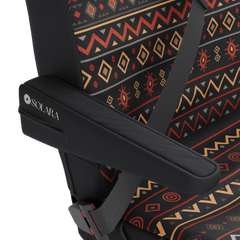
Myth: Custom-fit always looks better. Reality: with patterned fabric (Solara's specialty), the universal-fit "applied" look is much less visible because the pattern hides the cover/seat boundary. With solid colors, custom looks better. With patterns, the universal can look equally intentional.
Myth: My specific vehicle is too unusual for universal. Reality: most vehicles fit. The seats above are the exceptions, not the rule. Most owners assume their vehicle is special; usually, it isn't.
Verdict
Universal-fit seat covers fit most vehicles. The exceptions are predictable and documented. With a 3-point check (measurement, visual ID, compatibility lookup) plus a clear return policy, the risk of buying universal is small.
For the exceptions (race seats, luxury third rows, integrated boosters, oversized commercial seats, ventilation-critical seats, fold-flat crossovers), custom-fit is the right answer.
For everyone else, universal fit is the practical choice: lower cost, faster installation, and a good fit when properly installed.
FAQ
My car has heated seats: is that one of the exceptions?
No. Heat passes through the stretch fabric, so heated seats keep working; at most you'll notice a slightly slower warm-up.
My seats have lumbar support: does that affect fit?
No. Pneumatic lumbar inflates against the cover; fabric stretches naturally.
What about cars with massage seats?
Pneumatic massage works through covers. Mechanical kneading-type massage (rare) may be reduced in intensity but remains functional.
My truck has an integrated front belt: is that an exception?
Possibly, depending on truck and bench width. Modern F-150s and similar vehicles with integrated belts work with bench-specific cover systems. Older work trucks with extra-wide benches are the exception.
My car has a fold-down rear armrest: does a universal cover fit?
Yes. On Solara's back seat cover, the middle section opens up, so a fold-down armrest or cup holder stays usable with the cover on.
My Tesla has a one-piece headrest: does a universal cover fit?
Usually, yes; check the size guide if you're unsure. More detail in our Tesla guide.
Where can I check before buying? Check our compatibility guide, use the 3-point check above, and the 14-day return window covers the rare miss.


