













Somewhere on every decent canvas product is a number with “oz” after it, and almost nobody knows what it measures. That's a shame, because the ounce number is the closest thing textiles have to an honesty label: one figure that predicts how a bag, cover or tarp will behave for the rest of its life. Two minutes of decoding, lifetime of better purchases.
What the number measures
Ounces per square yard: take a square yard of the fabric, weigh it. That's it. More cotton packed into the same area means denser weave, thicker threads, or both, which translates directly into strength, opacity, structure and abrasion resistance. (The metric world says grams per square meter; 12oz ≈ 407 gsm, for the conversion-curious.)
The scale, with landmarks
- 4–5oz: bandana and bedsheet territory. This is the conference-freebie tote: translucent, structureless, doomed.
- 8–10oz: respectable mid-weight; decent aprons, softer totes, our 10oz liner layer.
- 12oz: the working sweet spot, stands on its own, shoulders 10-kilo loads, survives years of machine washing, still folds flat. This is our totes' outer shell, and most legendary workwear lives within an ounce of it.
- 16–18oz: heavy duck, work jackets, tool rolls; overkill for a bag you want to carry empty.
- 20oz+: tarps, sails, industrial webbing. Respect, no thanks.
Why we build at 12 (plus a 10 inside)
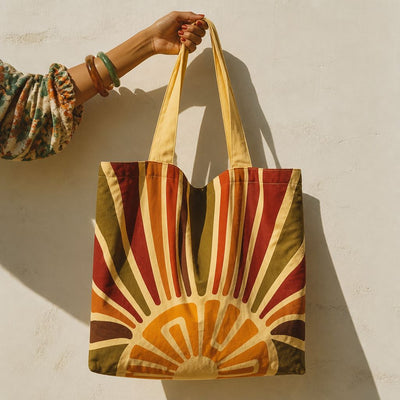
Bag engineering is a compromise between armor and everyday-ness, and 12oz is where they meet: corner-poking books don't print through (helped by the 10oz second wall), wine bottles stand safe, and yet the empty bag weighs nothing on a shoulder. The full anatomy (gussets, handle drops, stitching) lives in the canvas tote guide; the weave-vs-print quality story is in the jacquard explainer. Next time a listing says just “canvas tote” with no number: now you know exactly what that silence means. Ours say it proudly: 12oz, right here.


