









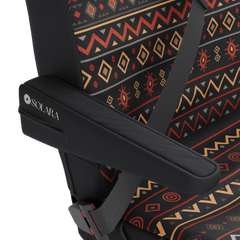


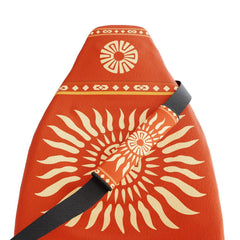



Short answer: to put on a car seat cover, take the headrest off, slide the cover down over the backrest, push the straps or hooks through the gap between the backrest and the seat cushion, fasten them under the seat, put the headrest back and pull the cover tight. A universal stretch cover takes a few minutes per seat. Fitted covers with lots of hooks take longer, about 15 to 30 minutes per seat the first time.
This guide covers front seats, back seats, double front seats in vans, covers with hooks, covers with plastic discs and covers with elastic straps. It also explains the side airbag check that most guides skip.
Watch: putting on a seat cover in about a minute
This is how a Solara universal car seat cover goes on. No tools and no extra hands:
- Position. Place the cover over the seat and line it up with the headrest.
- Strap in. Tuck the elastic straps under the seat and snap them in place.
- Adjust. Pull the cover tight to take out the wrinkles, then pull the seat belt buckles out through the cover.
The rest of this guide goes step by step for every kind of cover, including the ones with hooks and discs.
What type of car seat cover do you have?

How you install a cover depends on how it is made.
- Universal fit covers stretch over most standard seats and hold on with elastic straps, hooks or discs. They go on fast. Because one shape fits many seats, expect a little extra fabric to tuck in.
- Semi-custom covers are cut for a seat type, for example a high-back front seat or a 60/40 split back seat, but not for one exact car.
- Custom fit covers are cut for one make, model and year. They need the most fastening points and take the longest to fit.
The material changes how the cover behaves while you fit it. Neoprene grips the seat but can feel stiff in the cold. Faux leather slides into place easily. Heavy canvas is stiff, so warm it up first. Light woven fabrics with a waterproof backing, like the heavy duty fabric on Solara covers, are the most forgiving to line up.
Safety check before you begin
Most cars built after about 2012 have a side airbag in the outer edge of the front seat backrest. If a seat cover blocks that seam, the airbag cannot open properly in a side impact.
Look on the side of the backrest for a label that says "SRS AIRBAG" or "SIDE AIRBAG". If you find one, use only covers that are made to work with side airbags. These have a seam or panel on the airbag side that splits open when the airbag fires. Solara single seat covers have an airbag-friendly side seam on that side.
Also check for inflatable seat belts. Some Ford, Lincoln and Mercedes-Benz models from roughly 2011 to 2020 have inflatable rear seat belts that need a different cover pattern.
Never disconnect seat wiring. Power seat motors, airbag sensors and heating elements run through cables under and behind the seat. A well-designed seat cover goes on without touching any of them.
Tools you need
- The seat covers (check the fit for your car first, with the compatibility and size guide)
- A vacuum cleaner with a crevice nozzle
- A damp cloth and mild cleaner
- A plastic trim tool, or a flat screwdriver wrapped in tape, to push fabric into tight gaps
- Optional: a non-slip mat for leather or vinyl seats, and a hairdryer to soften stiff materials
How to prepare your seats

Slide the seat all the way back so you have room to work. Vacuum the seat, the backrest and every crevice. Grit trapped under a cover rubs the original upholstery over time, which is the opposite of what a cover is for.
Wipe the seat with a damp cloth if needed and let it dry completely. A damp seat under a cover can start to smell.
If you are replacing old covers, take a photo before you remove them so you can see where the clips and hooks went.
How to install front seat covers, step by step
A front seat cover usually has a backrest part and a seat part, sometimes joined into one piece, and often a headrest cover. Always start with the backrest.
Step 1: Remove the headrest
Press the release button at the base of one headrest post and pull the headrest straight up. If your seat has a built-in headrest that does not come off, skip this step and slide the cover over the whole backrest instead.
Step 2: Slide the cover over the backrest
Pull the cover down over the top of the backrest from above and line up its seams with the seams of the seat. On a seat with a side airbag, the airbag seam of the cover must face the door, not the middle of the car. Pull it down evenly on both sides and smooth out wrinkles as you go.
Step 3: Push the straps through and fasten them
Feed the straps, hooks or discs at the bottom of the backrest through the gap between the backrest and the seat cushion. Reach under the seat from the back, pull them through and fasten them. How you fasten depends on the cover, see hooks, discs and straps below. Pull everything tight: a loose strap lets the cover slide around.
Step 4: Fit the seat cushion
Lay the cushion part on the seat and line it up with the front edge. Push its back edge into the gap between cushion and backrest with the trim tool. Feed the straps under the seat and fasten them to the seat frame or to each other. Keep the seat belt buckle free: pull it out through the opening or the gap so it is not covered or pinched.
Step 5: Put the headrest back
Slide the headrest cover on, push the posts back into their holes through the cover and press down until the headrest clicks in. Pulling the headrest up one notch afterwards tightens the backrest cover.
Step 6: Test everything
Move the seat forward and back, recline it, and buckle the seat belt. On power seats, run the seat through its full range. If anything catches, fix it before you drive.
How to put on seat covers with hooks, discs or straps
Most "how do I attach this" questions come down to what is on the end of the straps.
Covers with hooks
Metal or plastic S-hooks clip onto something solid under the seat: a spring, a wire or the metal seat frame. Route the strap under the seat, find a fixed metal part that does not move when you slide the seat, and hook on. Keep hooks away from cables, the seat rails and the seat-adjust mechanism. If two straps meet under the seat, hook them to each other and pull tight.
Covers with plastic discs (anchors)
Discs, also called chucks or anchors, hold the middle of the cover down. Push each disc firmly through the gap between the backrest and the seat cushion so it ends up behind the seat. Once through, the disc turns flat and cannot pull back out, which keeps the cover from riding up when you get in and out.
Covers with elastic straps
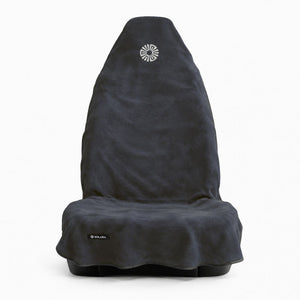
Elastic straps stretch around the seat and snap or buckle together under it. This is how Solara covers attach: tuck the straps under the seat, snap them in place and pull the cover tight. Because the straps are elastic, they adjust themselves to most standard seat sizes.
Seats with built-in headrests
Many modern seats, and most sports and van seats, have a headrest that is part of the backrest. A cover cut with a separate headrest piece will not fit those. Solara seat covers fit seats with a headrest, separate or built in, as long as the seat has one. Seats with no headrest at all are not a fit.
How to install back seat covers
Back seats sit lower and are harder to reach. Fold the backrest forward if you can, or lift the bottom cushion a little to make room for straps.
Start with the backrest cover. Slip it over the top and line up the seat belt openings with the real belt slots. For a 60/40 split back seat, fit the larger part first, then the smaller one. Then fit the cushion the same way as at the front: line up the front edge, push in the back edge, feed the straps under and fasten them. Check that every belt buckle, including the middle one, is free.
The Solara back seat cover fits most cars with a standard 2.5-seat back seat, including 60/40 split-folding seats, and the seat still folds with the cover on.
Double front seats in vans and campers
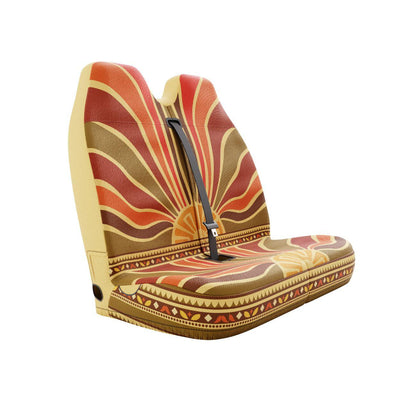
Many vans have a two-person passenger seat next to the driver. A double front seat cover is one piece that covers both places. Fit it like a front seat: backrest first, then the cushion, straps under the seat, buckles pulled through. Van seats differ a lot between models, so check the size guide before ordering.
Heated and ventilated seats
Seat covers work on most heated and ventilated seats, but the material matters. Thick neoprene or foam-backed covers block a lot of the heat. Thinner fabrics let more through. Never run straps across the cables on the underside of the seat.
Seats with built-in seat belts
Some Volvo, Land Rover and Subaru models run the seat belt through the backrest instead of the door pillar. Those seats need a cover with a belt slot. Check with the cover maker before you buy.
How to stop seat covers from sliding
- Tighten the straps again after the first few drives. Covers settle in.
- Push the back edge of the cushion deeper into the gap. That is what holds the cover in place when you slide in and out.
- On leather or vinyl seats, put a thin non-slip mat under the cushion part.
- Pull the headrest up one notch so the backrest cover stays tight.
5 common mistakes to avoid
- Putting the airbag seam on the wrong side. On seats with a side airbag, the cover's airbag seam goes on the door side. Check the inside of the cover for markings.
- Skipping the cleaning. Grit trapped under the cover wears the original upholstery, especially leather and vinyl.
- Leaving straps loose. Loose straps let the cover move and bunch up.
- Using a cover without an airbag seam on an airbag seat. This is the most serious mistake. A cover with no airbag seam can block the airbag completely.
- Not testing the seat afterwards. A cover that blocks the recline lever, the belt buckle or the seat controls has to be fixed before you drive.
How to keep your seat covers in good shape

Wipe spills off straight away. Solara covers are waterproof and machine washable: wash cold and hang to dry. For other covers, follow the care label, because some materials shrink or warp with heat. Faux leather lasts longer with a UV protectant every few months if the car stands in the sun.
Check the straps every few months. Elastic loses some tension over time, and a cover that starts to shift just needs its straps pulled tight again.
Frequently asked questions
How do you put on car seat covers with hooks?
Remove the headrest, slide the cover over the backrest, push the straps through the gap between backrest and cushion, then clip each hook onto a fixed metal part under the seat, such as a spring or the seat frame. Keep hooks away from cables and the seat rails, then pull the straps tight.
What are the plastic discs on seat covers for?
They anchor the middle of the cover. Push each disc through the gap between the backrest and the cushion so it sits behind the seat. It turns flat there and stops the cover riding up.
Do I need to take the seats out of the car?
No. Seat covers go on with the seats in the car. Removing a seat means disconnecting airbag and seat belt sensors, which is a job for a garage.
Can I use seat covers if my car has side airbags?
Yes, but only covers made for it, with a seam on the airbag side that splits open when the airbag fires. Solara single seat covers have an airbag-friendly side seam.
How long does it take to put on seat covers?
A universal stretch cover with elastic straps takes about a minute per seat once you have done one. Covers with many hooks, or custom fit covers, take 15 to 30 minutes per seat the first time.
Do seat covers fit seats with built-in headrests?
Some do. Solara covers fit seats with a headrest, separate or built in. They do not fit seats without any headrest.
Will seat covers void my car warranty?
In the United States, fitting seat covers does not void your car warranty under the Magnuson-Moss Warranty Act. If a cover causes damage, for example by blocking an airbag, the maker can refuse a warranty claim for that damage.
Do seat covers work with heated seats?
Yes. Thinner fabrics let the most heat through. Thick foam-backed or neoprene covers make heated seats noticeably weaker.
Ready to cover your seats?
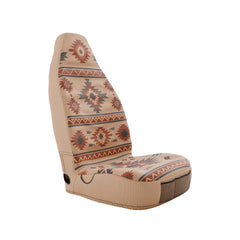
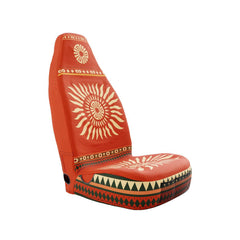
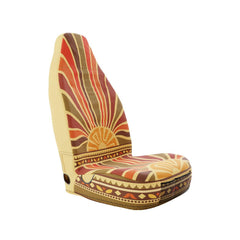
Find your print in car seat covers, add a back seat cover for the full row, and check the compatibility and size guide before you order.


