












Fashion runs on logos; boho runs on the opposite. A boho bag announces nothing except taste — pattern instead of monogram, texture instead of hardware, the sense that it was found in a wonderful market rather than a mall. The style has been “back” every summer since 1969 because it never coherently left. Here's what actually defines it, and how to buy the real thing.
What makes a bag boho
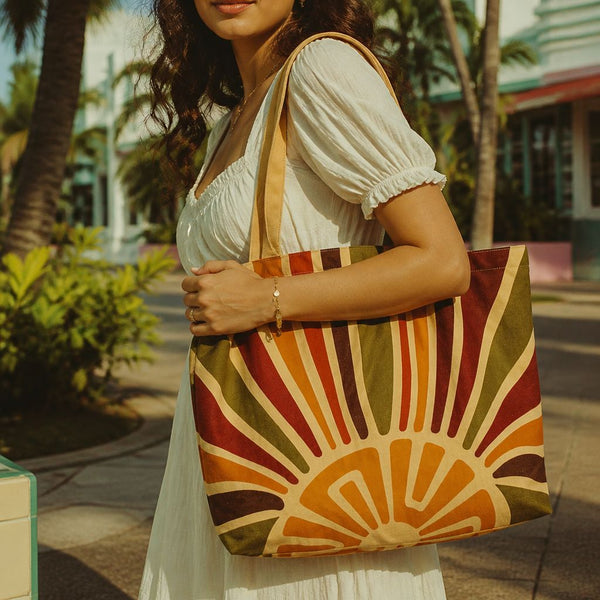
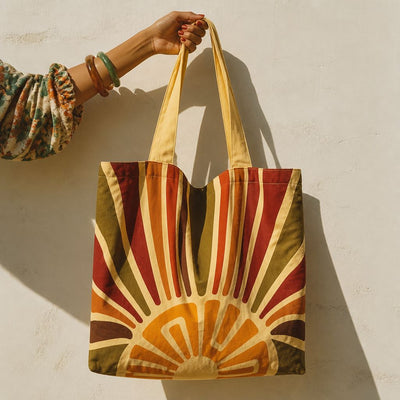
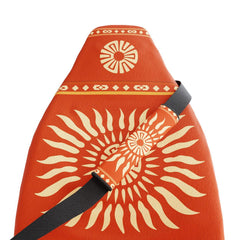
Three ingredients, in any combination: pattern with a lineage — Aztec geometry, kilim motifs, folk florals, 70s daisies; natural materials — cotton canvas, jute, leather trim, visible weave; and ease — boho bags slouch and shoulder, they don't clasp and perch. The look fails when any ingredient turns costume: one fringe too many and you're in festival-merch territory.
The quality check under the pattern
Boho's popularity means oceans of thin, printed-polyester imitations that pill by autumn. The tells of the real thing: fabric with actual weight (our canvas runs 12oz — why that number matters), pattern that participates in the fabric rather than sitting on it like a sticker, stitched — not glued — handle joins, and machine washability, because a bag too delicate to wash is decor, not luggage.
Our corner of the genre
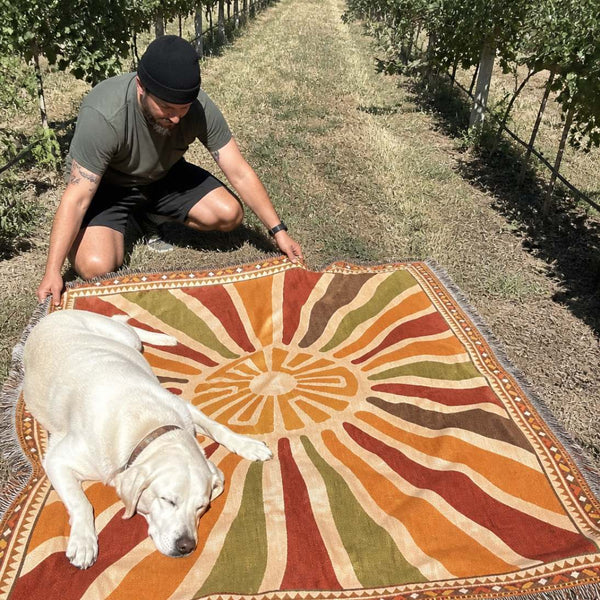
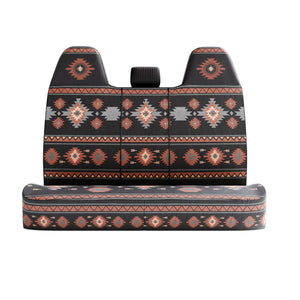
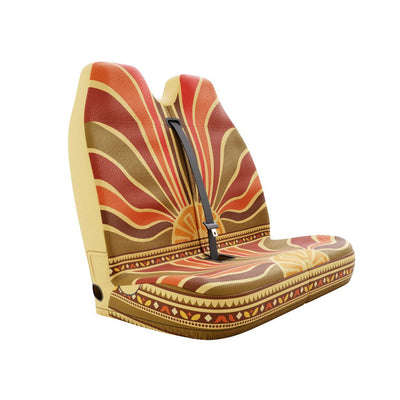
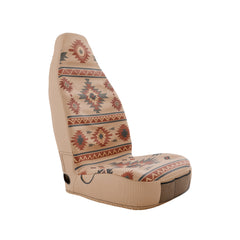
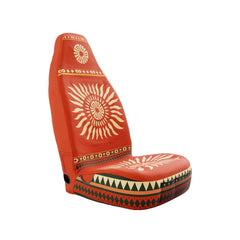
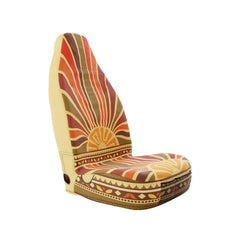
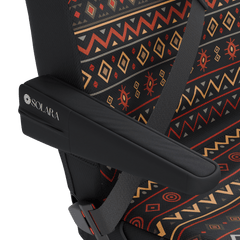
The Solara totes port our seat-cover prints into bag form: Savana's burgundy-and-navy diamonds for the earthy end, Cosmos's flowers-and-stars for the celestial end, Indigo's chocolate 70s daisies for the retro end. Because they share DNA with the rugs and seat covers, the bag can match the car and the picnic blanket — the coordinated-without-trying trick that is, frankly, the entire boho endgame (the full layering guide).


