

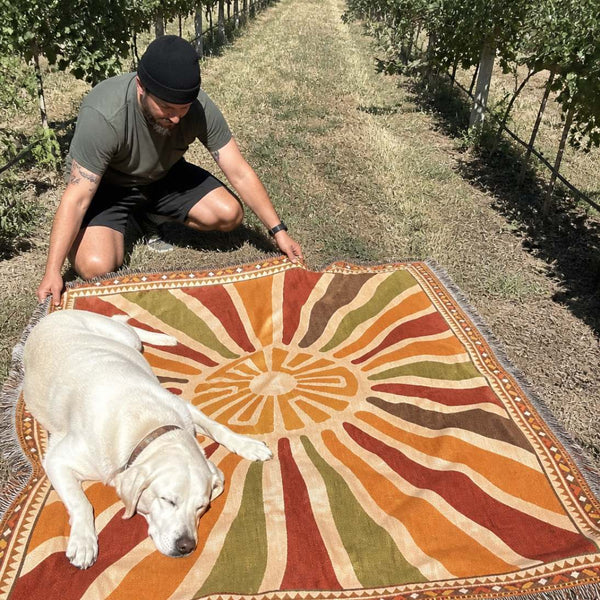
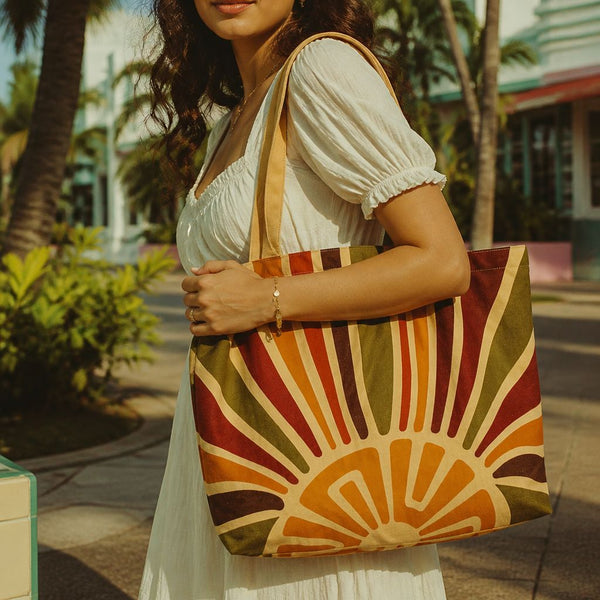
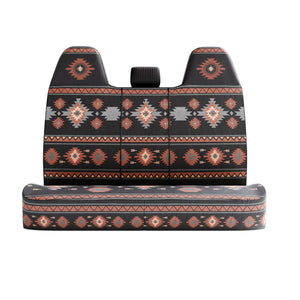

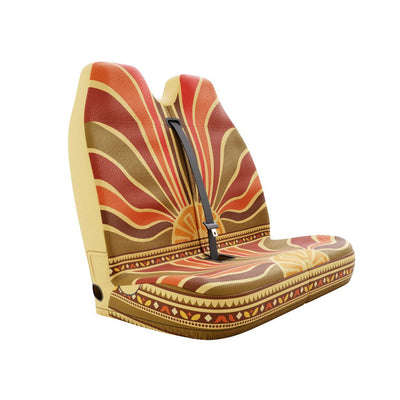

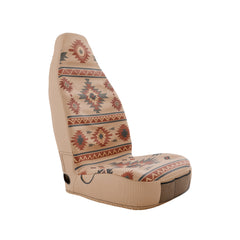

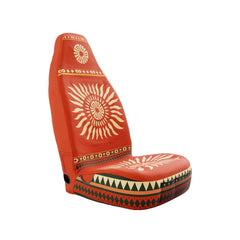
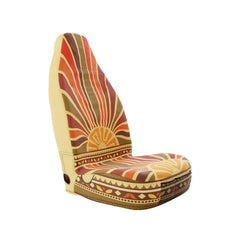


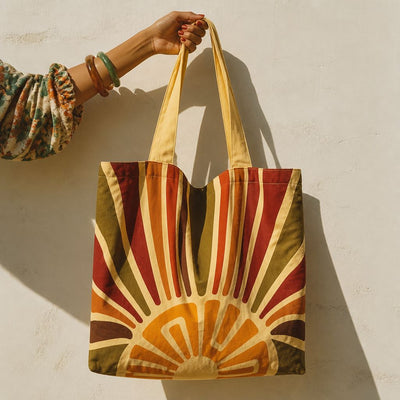






“Boho rug” is the retail label; underneath it are actual pattern languages with centuries of grammar — Aztec stepped geometry, Berber diamonds, Persian medallions, the sun-and-daisy dialect of the 1970s. Learning to read them turns rug shopping from vibes into vocabulary, and makes the difference between a room with soul and a room with props.
The four languages, briefly
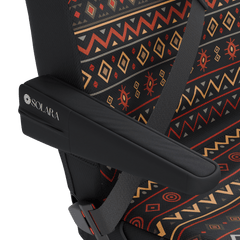
- Aztec/Southwestern: stepped diamonds, terraced zigzags, earth-and-fire palettes. High energy, reads instantly. Our Taos speaks it in rose and olive.
- Berber/kilim: sparser diamonds and lozenges, more breathing room — the minimalist's entry to pattern. Indigo (camel and charcoal) and Zara (navy) hold this register; the deeper history is in the kilim guide.
- Persian: central medallions, borders within borders, the most formal of the boho family — Kasbah's territory.
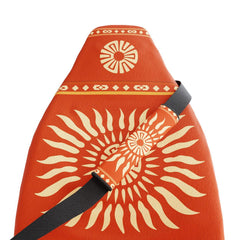
- 70s folk: suns, moons, daisies, waves — the youngest language and the friendliest: Solstice, Daisy, Nirvana.
Quality tells, whatever the language
Woven pattern, not printed — flip it; the reverse should show the design's negative (the jacquard test). Fringe that's the warp itself, not sewn-on trim. And washability, because a boho rug that can't survive real life is wall art misfiled (care routine).
Where boho rugs actually live
The 130×180 throw size is the style's most flexible citizen: bedroom-floor softener, sofa drape, van floor (the van chapter), picnic surface. The anti-costume rule from our layering guide applies indoors too: one hero pattern per view, neutrals around it, and let the language speak in sentences, not shouting. The whole library is here.


