














Most rugs are pile — fibers standing up from a backing, plush and rooted. The kilim is the other idea: warp and weft only, pattern woven flat into the structure itself, no pile at all. That construction choice, made by nomadic weavers across Anatolia, Persia and North Africa centuries ago, explains everything about why kilims are suddenly everywhere from design magazines to camper vans: flat rugs travel.
What flatweave buys you
No pile means light — a kilim-style piece folds and rolls like the tent-furnishing it originally was. It means reversible in spirit (pattern lives through the cloth, not on it). It means nothing for dirt and sand to root into, which is why flatweaves shake clean the way plush never will. And it means crisp geometry: kilim motifs — diamonds, hooked lozenges, banded borders — stay sharp because they're structural, not tufted.
The motifs and their accents
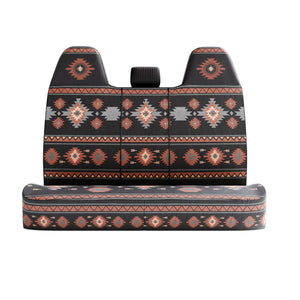
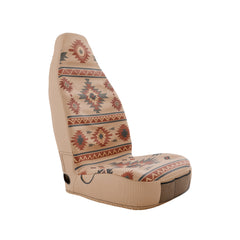
Traditional kilim grammar runs on protective diamonds (the famous “evil eye” lozenges), rams-horn hooks, and banded field-and-border layouts. Palettes are wool-and-madder honest: camel, charcoal, madder red, indigo. Our two kilim-register pieces speak it directly — Indigo in warm camel, charcoal and rust; Zara in deep navy with terracotta — woven as true jacquards, the modern loom descendant of the tradition (how that works).
Living with one now
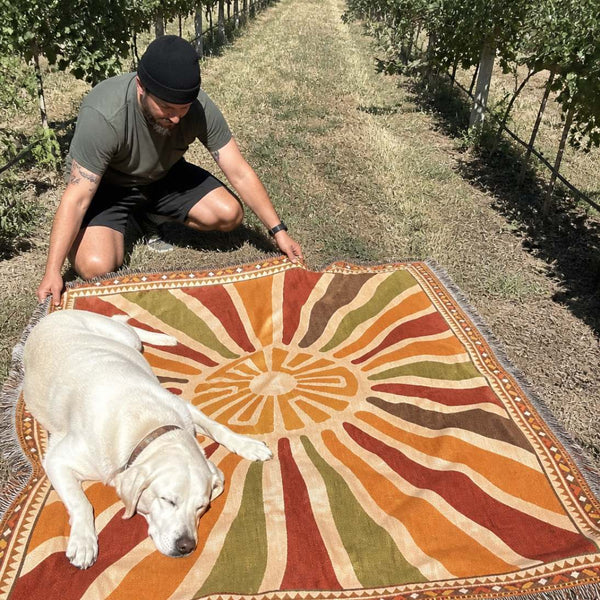
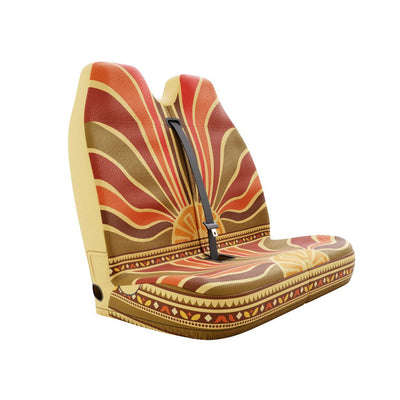
The kilim's historical jobs — floor, bedding, wall, saddlebag — translate directly: layer one over bland carpet, drape a sofa, soften a van build, ground a picnic. Machine wash cold and it outlives trends (care). Nomads engineered these to survive relocation by camel; your hatchback will be fine. The collection is here — the pattern-language overview maps the neighbors.


