







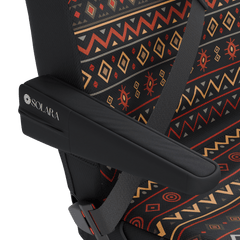





If you're shopping for floral car seat covers, the real decision isn't floral versus plain — it's which floral. We make two: Daisy and Dahlia, and they read very differently once they're actually stretched over a seat instead of sitting on a screen.
Daisy: The Classic, Everyday Floral
Daisy is the print most people picture when they hear "floral seat cover." Small white and yellow blooms scatter across a lighter woven ground, spaced enough that the pattern doesn't blur into a solid color from a few feet away. It's busy enough to hide crumbs and light pet hair between washes, but not so saturated that it takes over the cabin. Pair it with a grey or beige factory interior and it reads as an accent piece, not a full costume change. It's also the print we'd point a first-time buyer toward if they're nervous about going too bold.
Dahlia: Bolder, More Saturated
Dahlia leans into deeper reds and greens with a denser, larger flower pattern — less meadow, more statement piece. It photographs better than Daisy does, which is part of why it shows up more in customer posts, and it reads younger. Against a black interior it creates real contrast, which some drivers want and others find like a lot to look at every time they get in the car. If you've ever second-guessed a bold wallpaper choice in your own home, run the same gut check here before you order.
Where Floral Actually Works (and Where It Fights the Interior)
Floral covers do their best work against cream, tan or grey upholstery, softening a factory interior without clashing against it. Against a car that already has a lot going on — wood-grain trim, a sport interior with contrast stitching — a bold floral like Dahlia can start to compete rather than complement. This is the one honest trade-off we'll flag: if your dash is already busy, Daisy is the safer pick, and Dahlia is better saved for a simpler interior where it can actually stand out instead of getting lost in the noise.
What You're Actually Buying: Fabric, Fit and Install
Both prints are woven into the fabric, not printed on top of it, which is why the pattern doesn't crack, peel or fade unevenly the way a screen-printed cover eventually does. The covers stretch on over your existing seat in about two minutes with no tools and no professional install, and the seams are cut to stay clear of side airbags on the vehicles they're rated for. Fit is universal — built to work across a wide range of factory bucket seats rather than molded to one specific make and model, so don't expect the tailored look of a custom cover. What you get instead is a cover that goes on in the driveway on a Sunday afternoon.
Keeping the Print From Fading
Machine wash cold on a gentle cycle, then skip the dryer's high-heat setting — tumble low or let it air dry instead. That's really the whole routine. The dye in a woven print like this fades slower than a printed cover because the color runs through the fiber rather than sitting on the surface, but years of direct sun through a windshield will still take some edge off any fabric eventually. Nothing on the market is immune to that.
Do Daisy and Dahlia use the same fabric weight?
Yes. Both are the same woven construction — the only difference is the print, not the material underneath it.
Will floral covers fit a truck bench seat?
These are cut for front bucket seats. If you're covering a bench seat instead, our bench seat cover guide is a better place to start.
Can I run Daisy up front and something else in the back?
Plenty of customers do exactly that. There's no rule that the whole car has to match front to back.
For more on pairing a floral seat print with the rest of your dash and mats, our retro floral interior guide goes further than seat covers alone, and our pattern-picking guide is worth a look if you're still torn between prints. If you already know your interior leans neutral, the Daisy and Dahlia covers are both in stock now and ready to stretch onto your seats this week.


