

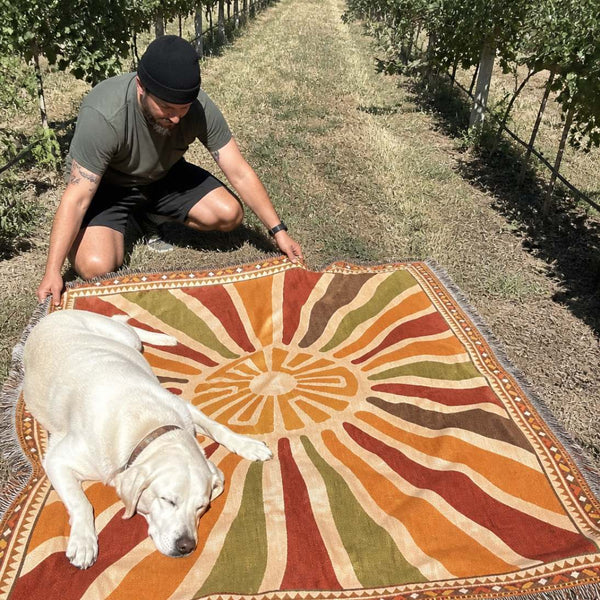
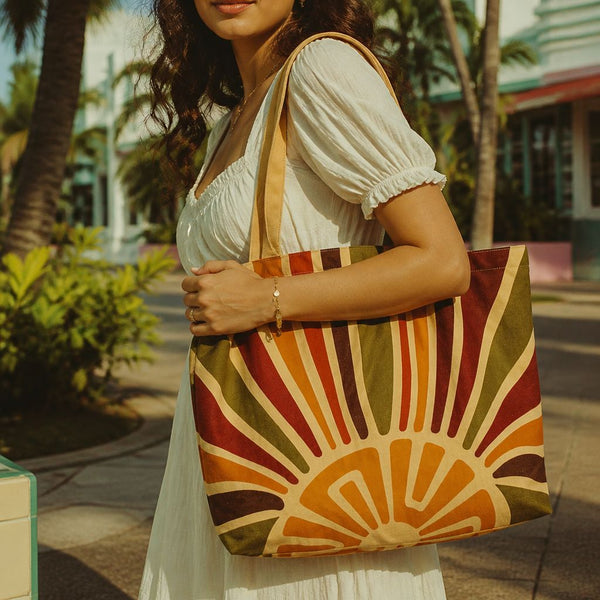
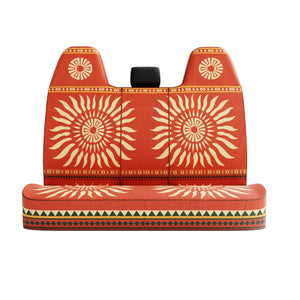


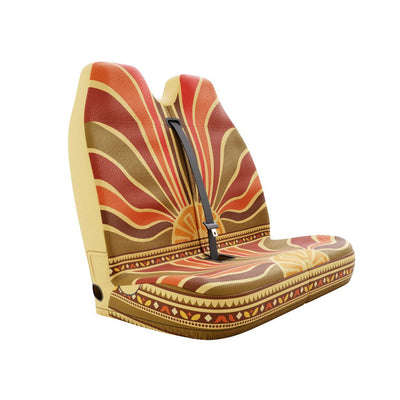

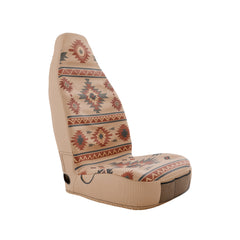
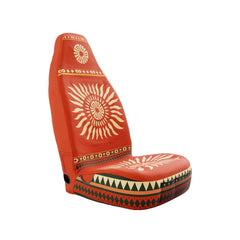

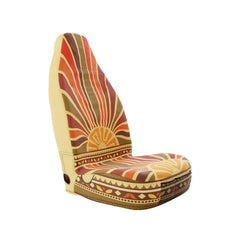


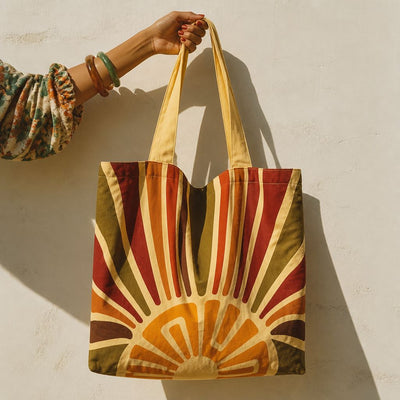

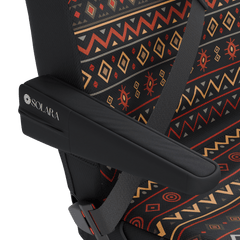


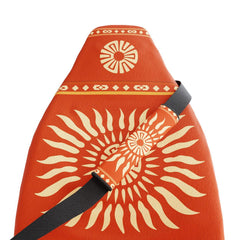



Boho car seat covers borrow from textile traditions (Moroccan rugs, vintage geometric prints, tribal weaves, and earth-tone Southwest aesthetics) to create patterns that look intentional rather than corporate. Choosing the right boho pattern for your car means matching the pattern's energy to your car's existing aesthetic. Below: what "boho" actually means in auto interiors, the four boho pattern families, pairing logic for different car types, and the 3-pattern mixing rule.
What "boho" actually means in auto interiors
The word "boho" gets used loosely. In interior design, it refers to a style that:
- Mixes patterns and textures rather than matching exactly
- Draws from global textile traditions (Moroccan, Persian, Indian, Mexican, African)
- Favors earth tones, deep blues, terracotta, indigo, ochre over pastels
- Embraces visible craft: looks hand-made or hand-designed rather than mass-produced
- Layers rather than minimizes
In car interiors specifically, boho seat covers translate this into:
- Patterned fabric (geometric, tribal, vintage) instead of solid colors or leather-look
- Earth-tone palette (Sand, Stone Grey, Clay, Indigo) over modern grays/blacks
- Designed-in-house feel rather than corporate generic prints
- Visible texture and pattern that contrasts with the typical conservative car interior
Boho is a deliberate aesthetic choice: making your car interior look intentional rather than generic.
The 4 boho pattern families
1. Geometric (modern boho)
Patterns with structured geometric shapes: diamonds, triangles, hexagons, repeating motifs. Often based on Moroccan zellige tile or vintage textile prints.
Solara examples: Luna, Karma
Best for:
- Modern cars with clean lines
- Cars with conservative interiors that need a subtle pattern
- Owners who want pattern but not dramatic
Avoid:
- Vintage cars (clashes with era aesthetic)
- Cars with already-bold interior trim
2. Tribal (deeper boho)
Patterns drawing from African, Indian, or Native American textile traditions: bold geometric shapes, rich colors, often asymmetric.
Solara examples: Zara, Mana, Indigo
Best for:
- Cars used for outdoor adventure (Wrangler, Outback, vans)
- Cars with neutral interiors that need bold contrast
- Owners who want statement pattern
Avoid:
- Conservative office cars (looks out of place)
- Cars where you want covers to disappear
3. Earthy / Southwest (subtle boho)
Patterns evoking Southwest US aesthetic: terracotta, sand, sage, dusty pinks. Often subtle textures rather than bold patterns.
Solara examples: Stone Grey, Sand, Clay, Dune
Best for:
- Almost any car (most versatile family)
- Cars with mixed interior colors
- Owners who want pattern to disappear / blend in
- Cars that need to look intentional but not bold
Avoid:
- Cars where strong contrast is desired (these patterns are subtle)
4. Eclectic / Vintage (curated boho)
Patterns that look hand-collected: slightly mismatched, vintage geometric, period-correct for older cars.
Solara examples: Sierra, Aria, Daisy
Best for:
- Older cars (1970s–2000s)
- Project car restorations
- Cars where you want intentional vintage feel
- Owners who collect vintage textiles in real life (your car matches your home)
Avoid:
- Brand-new luxury cars
- Cars with very modern interior trim
Solara's pattern lineup, categorized
| Pattern | Family | Color palette | Best on |
|---|---|---|---|
| Luna | Geometric | Multicolor Aztec on black | Black and dark gray interiors |
| Mana | Tribal / folk | Navy with folk-art motifs | Beige interiors |
| Indigo | Tribal | Cream with ocean-blue Aztec | Black/white interiors |
| Sierra | Eclectic / vintage | Cream with deep red and teal Aztec | Older cars, brown leather |
| Stone Grey | Earthy | Charcoal grey | Universal: any interior |
| Sand | Earthy | Warm beige | Beige, white, light cloth |
| Clay | Earthy | Deep earth brown | Black, brown, neutral |
| Dune | Earthy | Olive green | Black, gray and tan interiors |
| Karma | Geometric | Dark grey monochrome Aztec | Gray and black interiors |
| Aria | Eclectic | Cream with terracotta Aztec | Light and warm interiors |
Matching patterns to interior color
The single most important pairing decision: pattern vs. existing interior color.
Black interior (cloth or leather)
Best:
- Sand (warm beige adds warmth)
- Indigo (bold contrast)
- Clay (sophisticated deep brown)
Acceptable:
- Stone Grey (charcoal works against black)
- Luna (multicolor on a black base)
Avoid:
- Ash Black (disappears completely)
- Aria (too soft against bold black)
Gray cloth (most modern cars)
Best:
- Stone Grey (matches and elevates)
- Sand (warm contrast)
- Luna (dark multicolor stays calm on gray)
Acceptable:
- Indigo (cool blue against gray)
- Clay (warm brown against cool gray)
Avoid:
- Sierra (warm vintage palette clashes with cool modern gray)
Beige leather
Best:
- Stone Grey (sophisticated cool contrast)
- Sand (matches and warms)
- Sierra (vintage warmth on warm leather)
Acceptable:
- Clay (similar warm tones)
- Karma (dark grey geometry on neutral)
Avoid:
- Luna (dark multicolor fights warm beige)
- Ash Black (too heavy against warm beige)
White (Tesla and some luxury)
Best:
- Stone Grey (calm charcoal on white)
- Indigo (bold contrast)
- Sand (warm against cool white)
Acceptable:
- Clay (warm contrast)
Avoid:
- Ash Black (too stark against white)
- Aria (too soft)
Brown leather (older cars, vintage)
Best:
- Sand (matches era)
- Sierra (vintage on vintage)
- Clay (rich earth tone)
Acceptable:
- Stone Grey (modern contrast)
Avoid:
- Indigo (too modern for vintage car)
- Luna (too geometric for vintage)
Matching patterns to vehicle type
Vehicle type also affects pattern choice. The same pattern can look right on a van and wrong on a luxury sedan.
Vans / campervans / Sprinters
Lean into the boho aesthetic: these vehicles work with bolder patterns.
- Indigo (van + bold tribal = adventure aesthetic)
- Sierra (van + vintage = intentional old-school vibe)
- Luna (modern geometric on a clean conversion)
SUVs / crossovers (CR-V, RAV4, Outback, Highlander)
Mid-bold patterns work. Family use cases benefit from stain-hiding.
- Sand (universal family-friendly)
- Indigo (bolder, hides stains)
- Luna (modern geometric)
Trucks (F-150, Silverado, Ram, Tacoma)
Trucks take pattern well: utilitarian aesthetic supports it.
- Clay (deep brown hides dirt)
- Sand (warm neutral)
- Sierra (vintage truck vibe)
Daily-driver sedans (Camry, Civic, Accord, sedans)
Subtler patterns are usually right. Conservative interior + conservative pattern.
- Stone Grey (universal neutral)
- Sand (warm neutral)
- Karma (subtle grey geometry)
Luxury sedans (BMW 3, Mercedes C, Lexus)
Most owners avoid covers; if used, ultra-subtle is right.
- Stone Grey (only)
- Possibly Sand depending on interior
Sports cars (Mustang, Camaro, race-style)
Generally avoid universal covers: race seats often outside fit range. If used, bold patterns work.
- Indigo
- Sierra (for vintage muscle cars)
The 3-pattern mixing rule
If you want to mix patterns across different seats (front different from back, different patterns for driver vs. passenger), follow the rule of three:
- All patterns must share a color anchor. All warm tones, all cool tones, OR all neutrals.
- Vary the scale. Don't have three identical-scale patterns. Mix one large-scale, one small-scale, one solid or near-solid.
- One pattern dominates, others support. Pick the boldest pattern as the dominant: give it the front seats. Use subtler patterns in the rear.
Examples of mixes that work:
- Sand (front) + Indigo (back seat): a calm neutral up front, one bold accent behind. Works.
- Luna (front) + Karma (back seat): both dark-based Aztec, with Luna dominating. Works.
- Sierra (front) + Zara (back seat): warm reds on both rows, at different scales. Works.
Examples that DON'T work:
- Indigo (front) + Zara (back seat): Indigo is cool blue, Zara is fiery red on black. Color anchor mismatch. Avoid.
- Luna (driver) + Mana (passenger) + Lima (back seat): three different busy patterns. Too busy. Avoid.
Most owners don't need to mix patterns: pick one and use it across all seats. Mixing is for owners who want explicit aesthetic statement.
FAQ
Will the patterns clash with my car's headliner color?
Match the pattern to the seat color, not the headliner. Headliners are usually neutral (gray, beige) and accept any pattern.
Can I see how patterns look in my actual car before buying?
Solara has pattern photos on the product pages. Some buyers also use Photoshop overlays to mock up. Unused covers can be returned within 14 days of delivery.
What pattern looks best with a black interior?
Sand for warmth, Indigo for bold contrast, Clay for sophistication.
Do some patterns feel bolder or softer than others?
Yes. Zara, Sierra and Lima read bold; Aria and Sand read soft. Most patterns sit somewhere in between.
Will the pattern fade over time?
Solara's prints are made not to bleed or fade in the wash. Like any fabric, they last longest when the car isn't parked in full sun every day.
Can I get a custom pattern?
Solara doesn't currently offer custom patterns. The range of 25 prints and solids covers most tastes.
Verdict
Boho car seat covers add intentional design to a typically conservative interior. The right pattern depends on:
- Your car's existing interior color (most important)
- Your car's type and aesthetic
- Your personal style preference
Universal safe choices: Stone Grey (neutral) and Sand (warm neutral), work on almost any interior.
Bold statements: Indigo, Sierra (depending on era).
Subtle elevation: Luna, Clay.
For most owners, picking one pattern and applying it consistently is the right move. Mixing patterns is an advanced move that requires the 3-pattern rule.


