

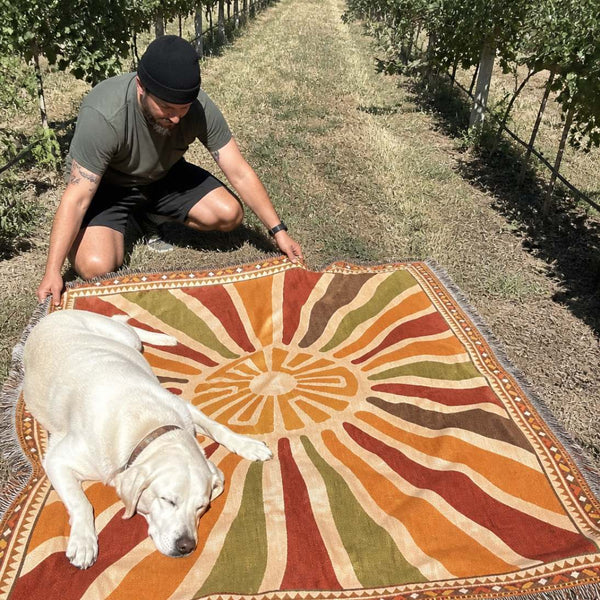

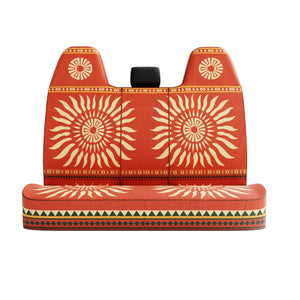


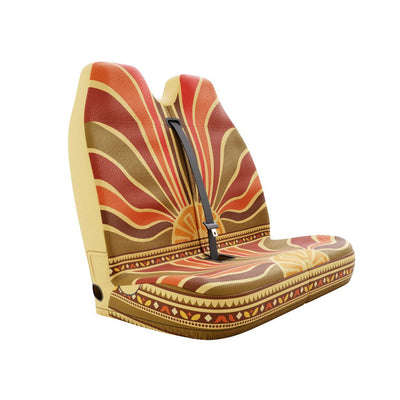

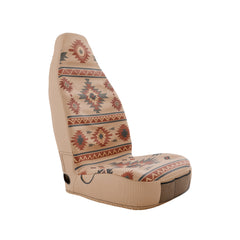
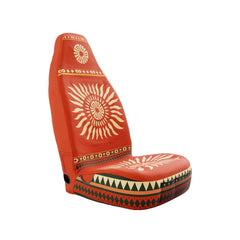

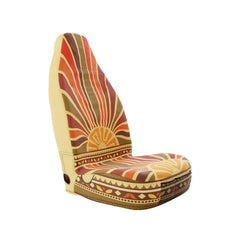


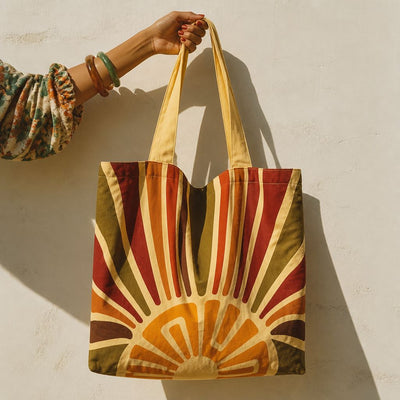




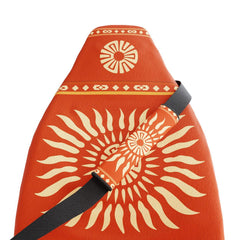



Earth-tone car interiors trade aggressive black-and-chrome for warmer, more livable palettes: sand, stone, terracotta, dusty olive, ochre. It's the automotive translation of the "quiet luxury" trend that's reshaping fashion and interior design. Below: the trend's origins, the six earth-tone families, how to bring earth-tone aesthetics to a stock car, and where the look works (and doesn't).
The quiet luxury trend: how cars are catching up
"Quiet luxury" emerged from fashion in 2022–2024. The aesthetic favors:
- Neutral palettes (camel, cream, stone, sage)
- Quality materials over visible logos
- Timeless silhouettes over trend-chasing
- Earth tones over bold colors
Interior design followed quickly. Living rooms moved from cool gray-and-white to warm beige-and-cream. Kitchens swapped chrome for matte brass. Walls went from "millennial gray" to "warm white."
Auto interiors are the slowest to follow because cars are designed years before they ship. But the trend is arriving:
- Mercedes EQS, BMW i7, Volvo EX90: all offering warmer interior palettes
- Lucid Air's Mojave Beige interior
- Tesla's white interior softening with cream and tan options
- Rivian's natural-wood interior accents
For drivers of older cars (or stock interior cars), aftermarket seat covers in earth tones are the fastest way to bring the trend home.
The 6 earth-tone families
1. Stone Grey (charcoal, the universal neutral)
Charcoal grey with cool undertones. The most versatile neutral because it works with any interior color.
Best for: any car, any interior. The "safe" choice that always looks intentional.
2. Sand (warm beige)
Warm beige: the tone of dry desert sand. Works against black, white, and beige interiors equally well. Slightly warmer than Stone Grey.
Best for: family vehicles, daily drivers, owners wanting subtle warmth.
3. Clay (deep earth brown)
Deep earth brown, closer to fired clay than to chocolate. More distinctive than Sand or Stone Grey, with the warmth and earthiness that dark cars need.
Best for: cars with black or brown interiors, vehicles used in Southwest/desert environments.
4. Dune (olive)
Muted olive green, the most outdoorsy of the four. At home in trucks and SUVs, and in cars with black, gray or tan interiors.
Best for: trucks, SUVs and overland builds. Less ideal if you want the cabin to feel light and airy.
5. Sage (dusty green)
Muted sage green. Less common in car interiors but increasingly available. Works against neutral interiors as a subtle accent.
Best for: owners wanting non-traditional earth tones. Pairs with stone exteriors and natural wood accents.
6. Ochre / mustard (warm yellow)
Warm yellow with brown undertones. Bold for car interiors but works in vintage cars and some lifestyle vehicles.
Best for: vintage cars (1970s especially), Wranglers, vans with intentional retro aesthetic.
Solara's Stone Grey, Sand, Clay, and Dune: a designer's picks
Solara's earth-tone lineup covers the four most versatile earth-tone families:
Stone Grey: the universal neutral. Charcoal grey. Works on every interior. The "I want covers but I don't want to commit" choice.
Sand: warm beige. Slightly warmer than Stone Grey. Works on most interiors. Best on beige and white.
Clay: deep earth brown. Distinct without being loud. Best on black and brown interiors. Adds warmth.
Dune: muted olive. Calm and outdoorsy. Best on black, gray or tan interiors, and a natural fit for trucks and SUVs.
Choosing between them:
| Your interior | First choice | Second choice |
|---|---|---|
| Black cloth | Sand | Clay |
| Black leather | Sand | Stone Grey |
| Gray cloth | Stone Grey | Sand |
| Beige leather | Stone Grey | Sand |
| White (Tesla) | Stone Grey | Sand |
| Brown leather | Sand | Clay |
Mixing earth tones with existing interiors
Three approaches to earth-tone covers in a non-earth-tone car:
Approach 1: Match the interior
Pick the earth tone that matches your existing seat color most closely. Stone Grey for gray, Sand for beige, Clay for brown.
Result: covers blend. Subtle refresh: looks like an upgraded version of your factory interior.
Approach 2: Warm contrast
Pick a warmer earth tone than your interior. If your interior is cool gray, pick Sand. If your interior is white, pick Sand or Clay.
Result: covers add warmth. Makes the cabin feel more livable, especially for cars that came in clinical / sterile interior options.
Approach 3: Earth-tone-on-earth-tone (advanced)
If your car already has a warm interior (beige, cream), pick a different earth tone for contrast. Brown leather + Clay covers, or beige cloth + Stone Grey covers.
Result: layered earth-tone aesthetic. The "intentional" look: clearly designed rather than accidental.
The "less is more" rule
Earth-tone interiors work best with restraint. The rule:
One bold element per cabin. Either patterned seats OR patterned floor mats OR patterned dashboard accent: not all three. Pick one, let the rest be subtle.
For Solara cover users:
- Stone Grey or Ash Black (quiet solids) → can pair with patterned floor mats or steering wheel cover
- Sand, Clay or Dune (warm solids) → keep other elements subtle
- Avoid: bold pattern covers + bold pattern floor mats + bold pattern dashboard
This is the difference between "intentional design" and "trying too hard."
Where earth-tone aesthetic works (and doesn't)
Works well:
- Daily drivers (Camry, Civic, RAV4, Outback): earth tones soften conservative interiors
- Family vehicles: warm tones feel more livable for kids
- Vans and campervans: earth tones fit the lifestyle aesthetic
- Vintage cars (1970s–2000s): Sand, Clay, Sierra are period-appropriate
- Cars in dry/desert environments: palette echoes surroundings
- Owners aged 30+ moving away from bold colors
Less ideal:
- Sports cars where bold contrast suits the aesthetic
- Race-prepped cars
- Owners who specifically want "techy minimalism" (Stone Grey is the only earth tone that fits this)
- Pure show cars where original interior colors matter
Earth-tone interior FAQ
Will earth-tone covers make my car look dated?
The opposite. Earth tones are currently the most-modern interior palette. The trend has 5+ years of runway.
Are earth tones harder to keep clean than dark colors?
Slightly. Stone Grey shows mud more than Indigo would, but mid-tone solids like Sand and Clay hide dirt well.
Will earth tones affect resale?
Earth tones generally improve resale because the cover hides stock interior wear. Buyer pool for earth-tone aesthetic is large and growing.
Can I get earth-tone covers AND a leather steering wheel cover?
Yes: the look pairs naturally. Tan or dark brown leather steering wheel + earth-tone seat covers is a coherent palette.
What about combining earth-tone covers with a solid-color floor mat?
Works well. Solid-color all-weather mats (charcoal, dark brown, beige) complement earth-tone covers without competing.
Will earth-tone covers fade in sun more than darker colors?
Solara's prints and solids are made not to bleed or fade in the wash. Like any fabric, lighter colors such as Sand show sun fading sooner than darker ones, so shade helps.
Do earth tones suit every style?
Yes. Stone Grey and Clay read the most neutral, Dune the most outdoorsy and Sand the softest.
Verdict
Earth-tone car interiors are the next major aesthetic: replacing the cool gray-and-black palette that dominated the last 15 years. Aftermarket seat covers in Stone Grey, Sand, Clay, or Dune are the fastest, cheapest way to bring this aesthetic to your existing car.
For most readers: Stone Grey is the safest choice, Sand adds warmth, Clay is for owners wanting more distinction, Dune for an outdoorsy look.
For total cabin transformation: pair earth-tone covers with all-weather floor mats in coordinating tones, a leather steering wheel cover in tan or dark brown, and dashboard restorer to lift faded plastic. Total cost: ~$350. Total transformation: significant.


