













Nobody buys an Elantra on impulse. It's the car of people who read the total cost of ownership tables — and those same people tend to ask us a very specific question: what's the cheapest way to keep the interior at resale-grade for six years? The answer is about fifty euros and ten minutes.
The fit answer
SE, SEL, Limited, hybrid, N Line — all current Elantras use standard front buckets with separate adjustable headrests. A universal stretch cover pulls over each one in about a minute (the install guide, though you barely need it). One honest caveat we give every sporty-trim owner: the full Elantra N's deeper sport buckets stretch the definition of universal. They'll take a cover, but snug, not showroom-flat. Regular N Line seats are fine.
Commuter math
An Elantra's enemies are boring and daily: the coffee that tips on the on-ramp, sun through the windshield at the same parking angle five days a week, jean rivets sawing the bolster on every entry. None of it is dramatic. All of it compounds. A waterproof cover turns that compounding damage into a cold wash cycle every month or two — while the factory cloth underneath stays exactly as the next owner wants to find it. If you want the full spreadsheet treatment, we did the arithmetic in are seat covers worth it.
Safety boxes, ticked
Side airbags deploy through the outboard seat seam and stretch covers leave that seam alone (explained here). Heated seats on SEL and up work through the fabric (details).
Pick a personality
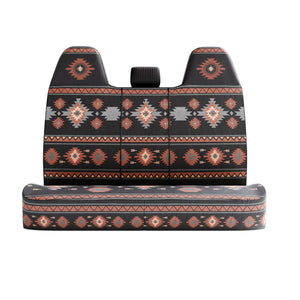
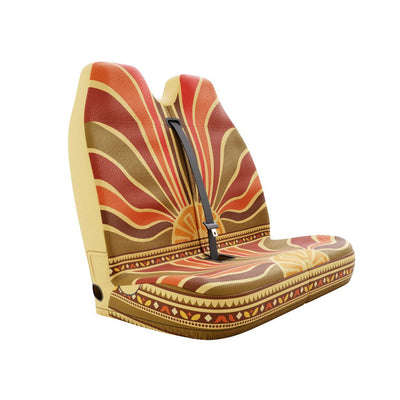
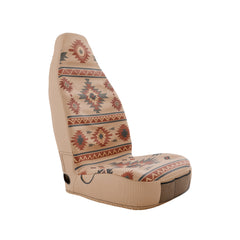
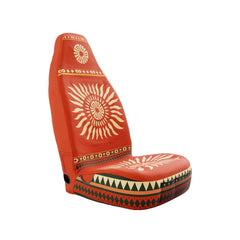
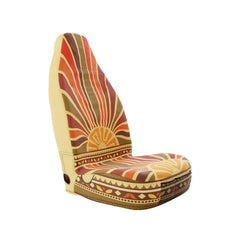
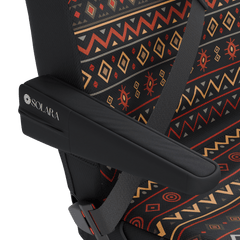
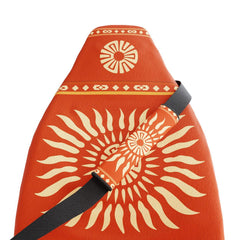
The Elantra's origami styling deserves better than gray polyester. Karma's black-and-grey geometry plays along with all those creases; Aria softens a black cabin with cream and terracotta; Ash Black is there for the strictly-business crowd. The whole range is in the Hyundai collection — Tucson and Santa Fe drivers, your guides are already up.


