












“Turkish” has become textile shorthand for a certain promise: flat-woven, absorbent, better with every wash, somehow both ancient and beach-ready. Like most shorthand it compresses a real story — Anatolia sits at the crossroads where cotton cultivation met nomadic weaving met Ottoman bath culture, and each contributed a textile the world eventually borrowed.
The family tree
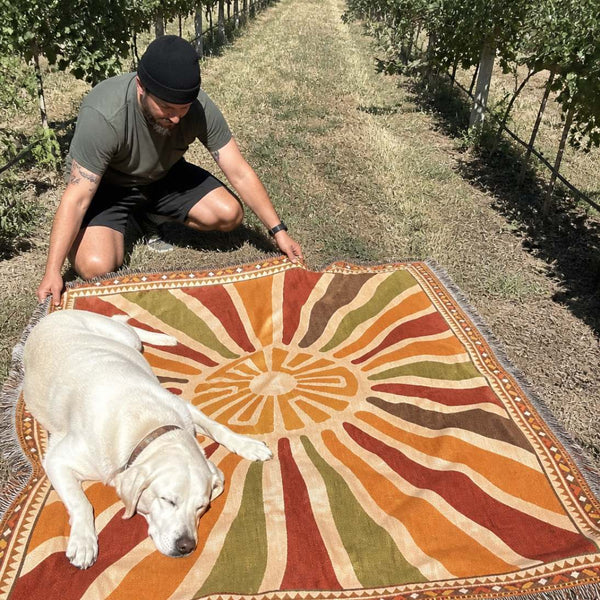
The pestemal: the flat-woven bath towel of the hammam — thin, fast-drying, fringed — that became the “Turkish towel” taking over beaches. The kilim: the flat-woven rug tradition, pattern as structure, covered fully in our kilim guide. The Turkish blanket of modern listings usually means the middle child: heavier than a pestemal, softer than a floor kilim, woven cotton meant for sofas, beds and sand. The unifying thread across all three is the same construction religion: flat weave, natural cotton, pattern in the cloth, better with washing.
What the tradition teaches buyers
Three transferable lessons. Flat beats plush for versatility — the hammam knew it, the beach confirms it (the sand physics). Fringe tells the truth — traditional fringe is the warp itself, knotted; glued-on trim marks an imitation. Wash-improvement is the mark of quality cotton — good flat weaves soften and bloom over dozens of cycles rather than degrading, which is the exact opposite lifecycle of fleece.
Where our looms pick up the thread
Our jacquard collection is this tradition run through the loom Joseph-Marie Jacquard added to the story (that chapter here): flat-woven cotton, structural pattern, true fringe — with motifs spanning the whole map, Persian medallions to Anatolian-register navy kilim. Machine wash cold, watch it improve, repeat for a decade (care). Some traditions survive because they were simply correct.


