







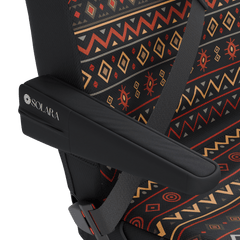


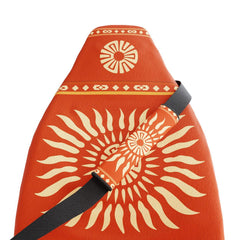



Beach textiles suffer from an identity confusion: towels get spread as ground cover, blankets get pressed into drying duty, and both fail at the borrowed job. They're different tools that happen to share a shape — and the comparison, run honestly, ends in a system rather than a winner.
Round one: sand behavior
Terry toweling is engineered to grab — that's what loops do — and they grab sand exactly as enthusiastically as water. A towel on sand becomes sandpaper-adjacent within the hour and exports a dune to your car. Flat-woven blankets hold sand loosely on the surface; one flick and it's gone (the full physics). Blanket, decisively.
Round two: drying a human
Reverse verdict, same physics: those loops exist to wick water off skin, and flat weaves simply can't match the absorbency per pass. Post-swim, the towel is the tool. Towel, decisively.
Round three: territory and hosting
A towel seats one damp person; a 130×180 blanket hosts three humans, the cooler, the picnic spread and the phone pile, while its mass resists wind that sends towels cartwheeling. Blanket, by a landslide — hosting is what blankets are for.
The system verdict
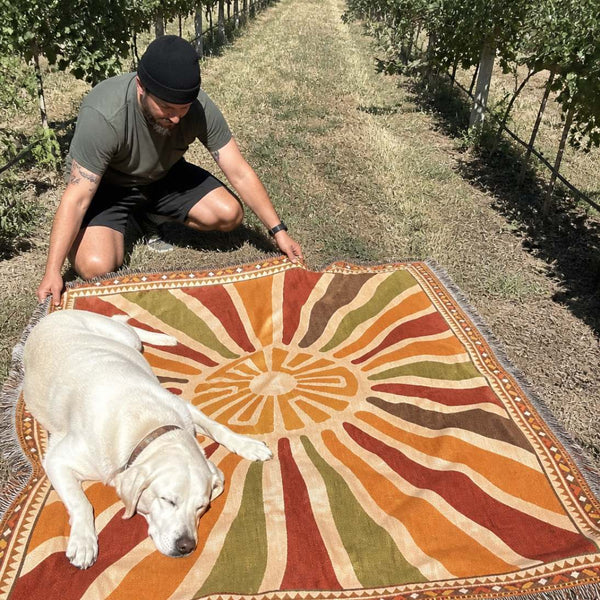
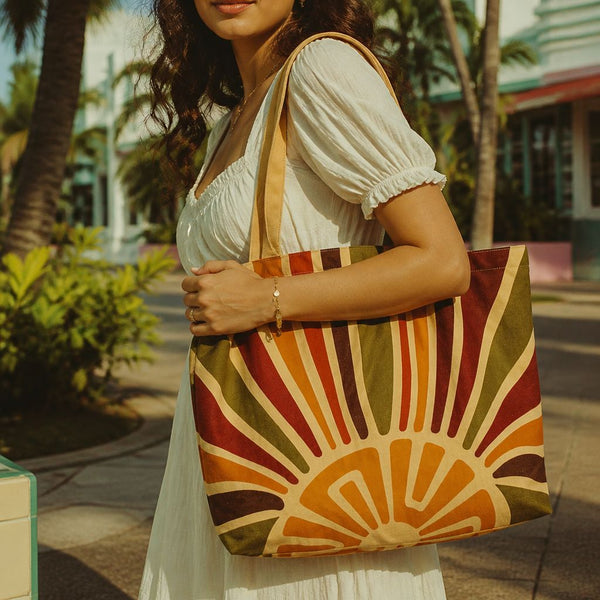
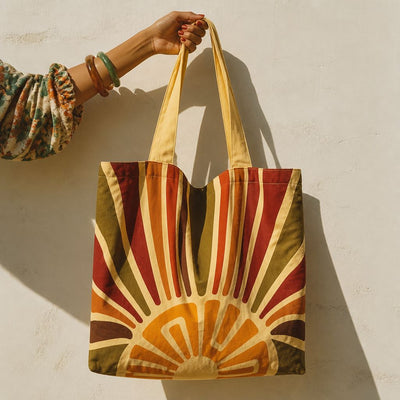
The correct beach loadout was never either/or: one flat-woven blanket as the floor, towels stacked on it strictly for drying, everything hauled in one canvas tote. Buy order, if starting from zero: the blanket first — it's the one doing year-round double duty as sofa throw and car resident while towels stay towels. Our candidates for the post: the jacquard twelve, sunburst-through-kilim, all machine washable when the season leaves its evidence.


