

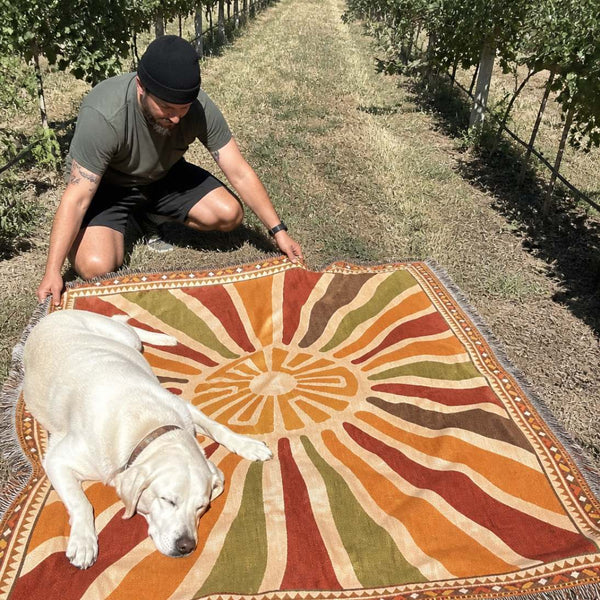









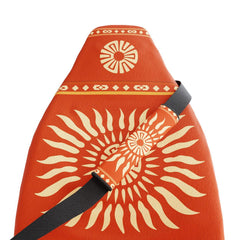



Gear lists obsess over sleeping bags and ignore the textile that does the most waking work at any campsite: the camping blanket. It's the fireside wrap, the tent-floor civilizer, the hammock underquilt-improviser, the dawn-coffee shawl and the picnic surface — the sleeping bag's off-duty colleague. Choosing one well matters more than the gear industry admits.
The fire question settles the fiber question
Campfire sparks are tiny and inevitable. On cotton and wool they land, glow a second, and die — maybe a pinhead scorch. On polyester fleece and nylon puffies they melt, leaving craters and that unmistakable smell. Every synthetic camp blanket eventually wears its constellation of melt-holes; natural-fiber wovens just get more storied. Around fire — which is the whole point of camping — cotton weave is the adult choice.
The rest of the spec
- Ground-capable: flat weave shakes off forest duff and dries fast when the dew wins (damp-ground layering tactics in the outdoor guide).
- Warmth-per-kilo honesty: down throws win the ratio but fail fire, moisture and washing; a kilo of woven cotton wins everything else.
- Wash-off-the-trip: woodsmoke soaks textiles — lovely for a day, permanent without a machine wash, which down and wool make complicated and cotton makes Tuesday.
Camp style is real style
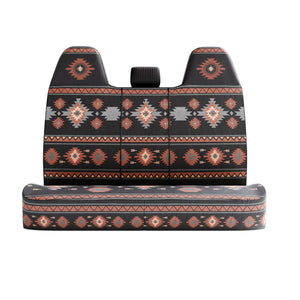
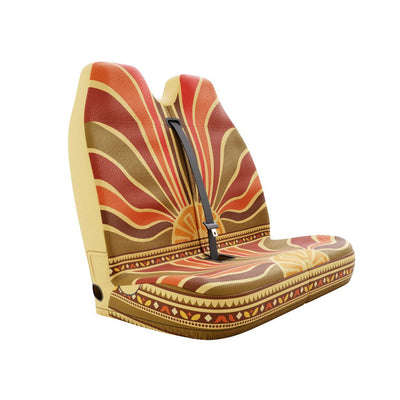
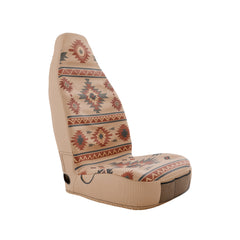
The campsite aesthetic — enamel mugs, cast iron, lantern light — has a textile language, and it's woven: Persian-medallion reds by firelight, Southwestern diamonds against pine. Car campers get it easiest: the rug rides in the always-packed kit, does the drive as a car blanket, and comes home smelling like the good decisions were made.


