













Every October, bleachers teach the same physics lesson: aluminum at 8 p.m. conducts heat away from your body faster than any wind. The rookies bring a blanket and put it over their laps; the season-ticket veterans put it under themselves first. That single insight — conduction beats convection — is most of stadium blanket doctrine. Here's the rest.
The under-then-over system
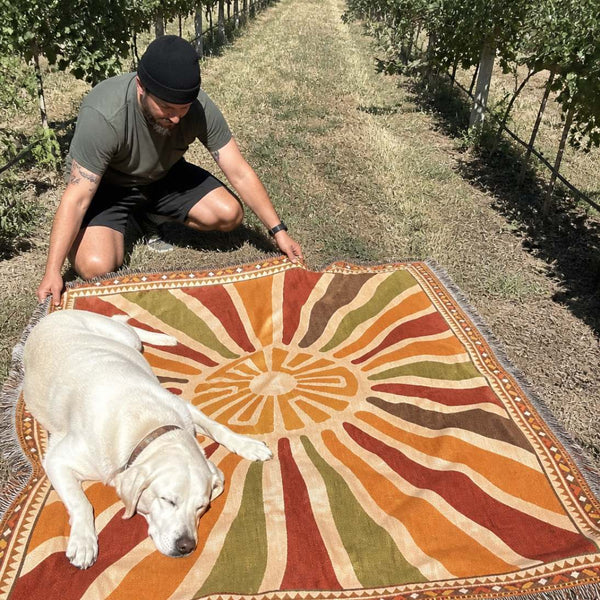
Fold the blanket to quarter-size and it becomes a seat pad four layers thick: insulation from the metal below plus actual cushioning for hour three. This is where woven blankets embarrass thin fleece — fold count times fabric mass equals comfort, and a jacquard folded to quarters is genuinely upholstered seating. Second half, unfold to half-size: two layers under, the rest across two laps. One blanket, both jobs, no gear bag required.
The stadium checklist
- Foldable mass — the whole doctrine depends on it; a 130×180 woven blanket quarters to seat-pad size perfectly.
- Nothing slippery: woven cotton grips bleacher metal; silky fleece toboggans off it, usually mid-cheer.
- Spill-survivable: stadium cocoa is a when, not an if — machine washable or nothing (the cold-cycle routine).
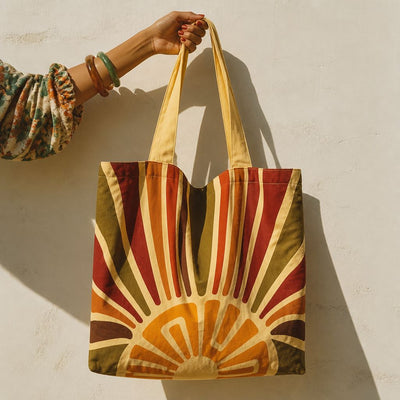
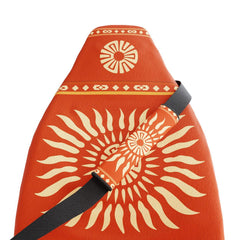
- Team-adjacent colors, tastefully: a navy-and-terracotta kilim or rust sunburst cheers along without the licensed-merch look.
Sideline seasons beyond the stadium
The same blanket runs the whole spectator calendar: youth soccer Saturdays (with the car tote system it lives in the trunk year-round), autumn park dates, and firework nights. Come summer it's the beach blanket — the year-round textile argument our whole rug collection is built on.


