

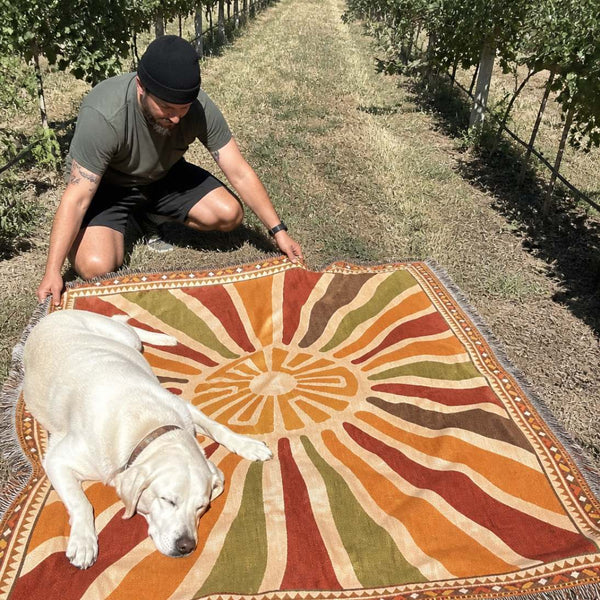














“Outdoor blanket” is a category that has to serve ridiculous range: July sand and October bleachers, dry park grass and suspiciously damp campfire logs, a toddler's picnic and a windy fireworks night. Buy for only one surface and the blanket stays home most weekends. The all-ground spec exists — here's what it looks like.
The four surfaces, and what each demands
- Grass: the easy one — anything works dry. Dew or recent rain wants either a waterproof-backed mat or the layering trick below.
- Sand: flat weaves only, for shedding reasons the beach guide explains at length.
- Bleachers and benches: here the blanket is padding and insulation — mass and fold-thickness matter, which is where woven blankets beat thin nylon utterly (the stadium chapter goes deep).
- Campfire distance: natural fibers again — a stray spark lands on cotton weave and dies; on synthetic fleece it melts a souvenir hole.
The damp-ground layering trick
The one job woven cotton won't do alone is barrier duty on soaked ground. Veterans carry a cheap plastic-backed sheet folded to nothing, deploy it under the woven blanket when the ground is wet, and get both physics: dryness from below, actual comfort above. Ten grams of humility, total victory (the picnic guide preaches the same doctrine).
Why woven wins the portfolio
Across all four surfaces the winning spec converges: flat weave, natural fiber, real mass, machine washable, and looks you'd allow indoors — because the honest secret of outdoor blankets is that they live inside 300 days a year. A jacquard rug like Yucca or Taos does bleachers Saturday, sofa Sunday and beach August — one kilo, every ground. Care is a cold cycle (the routine).


