





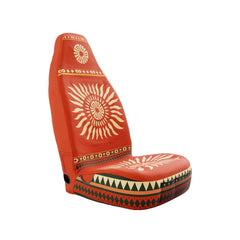
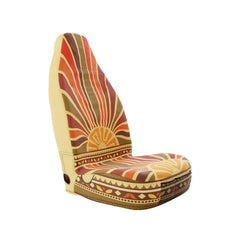











Walk through any RV lot and you'll notice something: fifteen-year-old coaches with pristine kitchens and absolutely destroyed cab seats. The house part of a motorhome gets babied; the driving part gets driven — in full sun, through every meal eaten at the wheel. RV seat covers fix the half that ages first.
By class, briefly
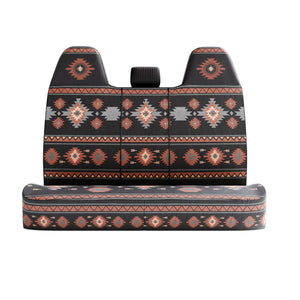
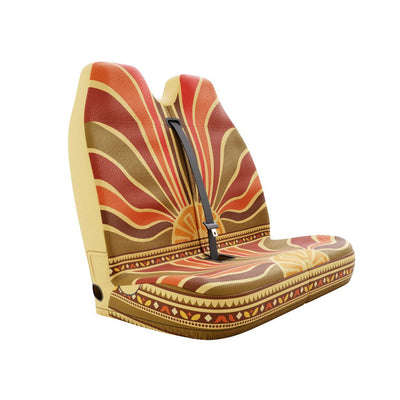
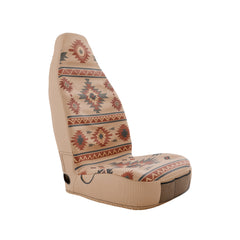
Class B and C (van-based): the cab is literally a Transit, Sprinter, ProMaster or E-Series front end, so those fit guides apply directly — Sprinter, Transit, E-Series. Class A: big captain's chairs with dual flip-up armrests. A universal stretch cover handles the seat body; flip the armrests up during install, and wrap each in an armrest cover — they're the surfaces that crack first in dashboard sun anyway.
The swivel-seat note
Many RV cab seats swivel to face the living area, doing double duty as lounge chairs — which doubles their hours and their spill exposure. Covers don't interfere with swivel bases (nothing anchors below the cushion), and doubling the duty is exactly when washable starts mattering: cold cycle, hang dry, back on before the next departure (the routine).
Dinettes and the rest of the house
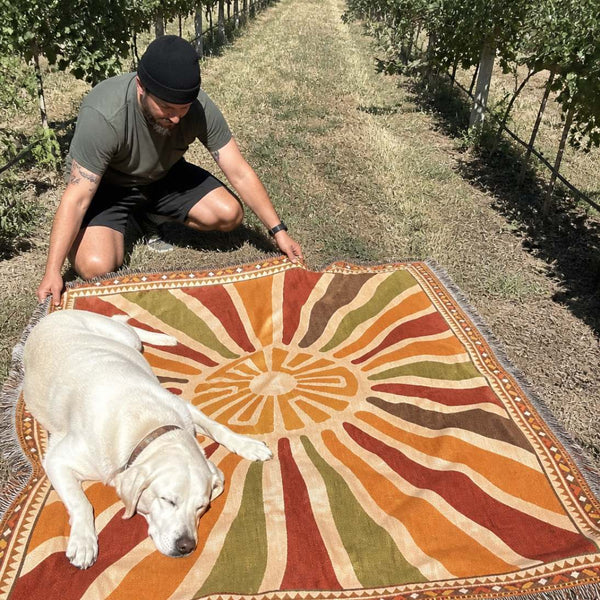
Dinette benches are furniture, not vehicle seats — fitted vehicle covers don't apply. The tool there is a jacquard throw rug: over the dinette cushions during muddy season, across the bed as a top layer, out the door as the campsite blanket. One textile, four jobs, machine washable — peak RV logic.
Sun is the real enemy
An RV windshield is a greenhouse wall. UV murders cab upholstery years before wear does, and a cover simply takes the sentence instead (the sun-damage mechanics). Earth tones like Clay and Savana also show dust less between washes — and dust, as every RVer knows, is a lifestyle.


