





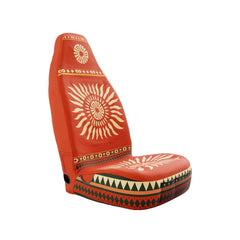
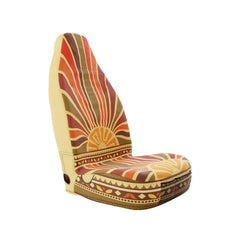




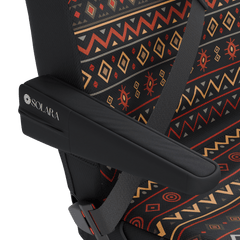






In a normal car, seats are transport. In a camper, the moment you park and swivel the chairs around, they become the armchairs of a very small house — morning coffee seats, rainy-day reading seats, sunset-watching seats. Camper seat covers therefore get judged by furniture standards and vehicle standards at once. Here's how to pick something that passes both.
Vehicle standards: the fit half
Camper cabs come in a handful of shapes, all covered in this series: the campervan double-bench layout, the Sprinter/Transit/ProMaster conversions, and the RV captain's chairs. Universal stretch fit works across all of them because none of it anchors under the cushion — which also means swivel bases keep swiveling, unbothered.
Furniture standards: the living half
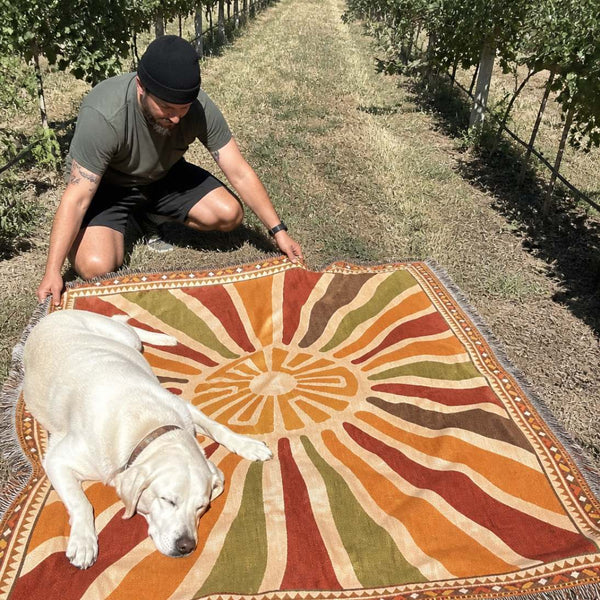
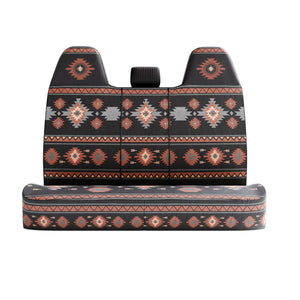
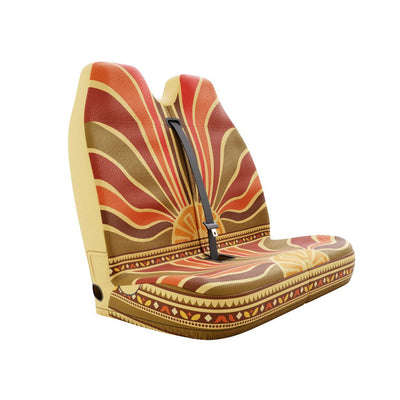
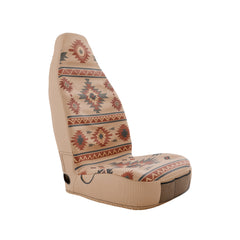
Furniture rules are different: fabric you want to touch, colors that make the space feel bigger, and washability measured in seasons of daily use, not occasional accidents. This is where camper owners go for pattern — the cab is the most visible textile surface in the build, and a print sets the whole tone. Sedona reads warm-desert-cabin; Sierra reads Santa Fe morning; the solids read Scandinavian restraint. Whatever the direction, matching belt sleeves and a floor rug carry it through the rest of the space (the layering logic).
The one spec both halves agree on
Washable, truly. A camper cab collects cooking smells, campfire smoke, wet-dog Tuesdays and sunscreen — domestic life at vehicle intensity. A cold machine cycle (routine here) is what keeps a two-year-old build smelling like a two-week-old one. Full-time perspective lives in the vanlife guide and the essentials list.


