













Somewhere on every decent canvas product is a number with “oz” after it, and almost nobody knows what it measures. That's a shame, because the ounce number is the closest thing textiles have to an honesty label — one figure that predicts how a bag, cover or tarp will behave for the rest of its life. Two minutes of decoding, lifetime of better purchases.
What the number measures
Ounces per square yard: take a square yard of the fabric, weigh it. That's it. More cotton packed into the same area means denser weave, thicker threads, or both — which translates directly into strength, opacity, structure and abrasion resistance. (The metric world says grams per square meter; 12oz ≈ 407 gsm, for the conversion-curious.)
The scale, with landmarks
- 4–5oz: bandana and bedsheet territory. This is the conference-freebie tote — translucent, structureless, doomed.
- 8–10oz: respectable mid-weight; decent aprons, softer totes, our 10oz liner layer.
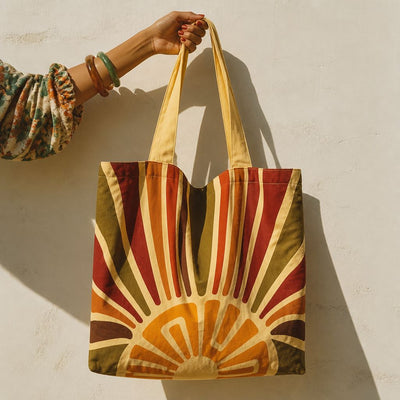
- 12oz: the working sweet spot — stands on its own, shoulders 10-kilo loads, survives years of machine washing, still folds flat. This is our totes' outer shell, and most legendary workwear lives within an ounce of it.
- 16–18oz: heavy duck — work jackets, tool rolls; overkill for a bag you want to carry empty.
- 20oz+: tarps, sails, industrial webbing. Respect, no thanks.
Why we build at 12 (plus a 10 inside)
Bag engineering is a compromise between armor and everyday-ness, and 12oz is where they meet: corner-poking books don't print through (helped by the 10oz second wall), wine bottles stand safe, and yet the empty bag weighs nothing on a shoulder. The full anatomy — gussets, handle drops, stitching — lives in the canvas tote guide; the weave-vs-print quality story is in the jacquard explainer. Next time a listing says just “canvas tote” with no number: now you know exactly what that silence means. Ours say it proudly: 12oz, right here.


