










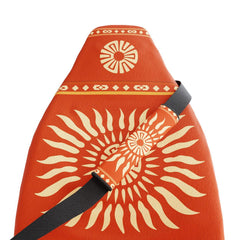



A seat belt spends every drive pressed against your neck or collarbone, and on longer trips that edge starts to saw. Seat belt covers — padded sleeves that wrap the shoulder strap — are a tiny fix for a daily annoyance. Here's an honest look at what they do, what they don't, and how to choose a pair.
What a belt cover actually does
- Spreads pressure. Padding widens the contact area so the webbing edge stops digging into your neck — the difference is most obvious for shorter drivers and front passengers, where the belt naturally rides higher.
- Stops the sawing. The soft sleeve glides against clothing instead of abrading it — collars, blouse fabrics and sunburned summer shoulders all thank you.
- Beats the buckle burn. Dark webbing gets genuinely hot in a parked car; a fabric sleeve is what touches skin instead.
- Protects the belt itself. The strap is what dogs lean on and toddlers chew — a washable sleeve takes that instead of the webbing.
What it must never do
A belt cover should never interfere with the belt's function: it wraps only the shoulder section, well above the buckle and retractor, and closes with a secure wrap so it can't slide down into the mechanism. Fit it high, keep the buckle zone clear, and the safety system works exactly as designed. (Same principle as covers and airbags — protection must never block function; see our airbag guide.)
Choosing a pair
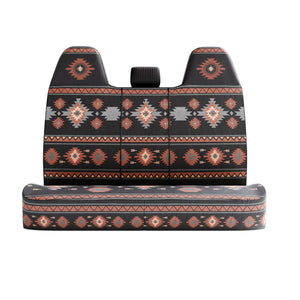
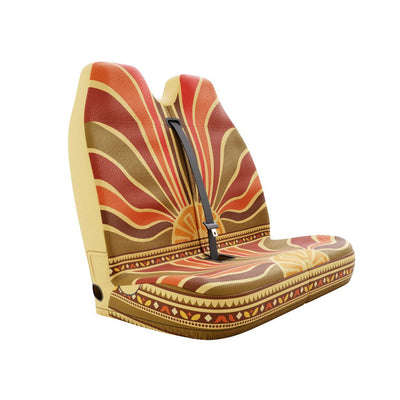
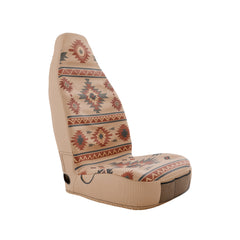
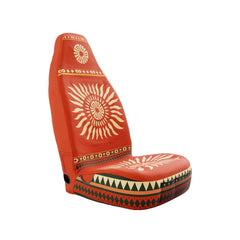
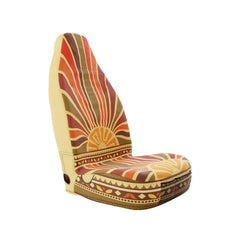
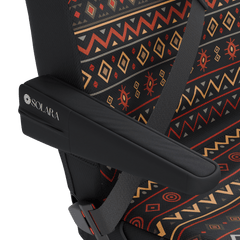
Belt sleeves are sold in pairs — driver and passenger — and the choice is mostly aesthetic: they're the accessory that ties a covered interior together. Ours come in every Solara print, so the belt matches the seat: Zara's black-and-orange Aztec, Indigo's cream-and-blue, soft Aria terracotta, or quiet solids like Ash Black. The full range is in the seat belt sleeves collection.
Care
Waterproof coating means coffee and dog slobber bead up; a cold machine cycle resets them completely — same routine as the seat covers. If you're building a matched interior, start with the seat cover, add the sleeves, and finish with an armrest cover — the three touchpoints your hands and shoulders actually feel every drive.


