














Look at any five-year-old car: the seats might be fine, but the center console lid is cracked, shiny or peeling. That's because your elbow lives there — every drive, all drive long, with sweat, skin oils and UV doing slow damage. A car armrest cover is the cheapest fix in the interior, and almost nobody thinks of it until the damage is done.
Why armrests wear out first
Consoles and door armrests take concentrated, repeated contact on a small area — the same square inches, thousands of hours. Factory materials (foamed vinyl, cheap leatherette) crack under that focused load long before seat fabric gives up. Once the lid is cracked, replacements are dealer-priced; a stretch cover costs less than lunch and goes on in seconds.
What a center console cover does
- Absorbs the wear — the cover takes the elbow hours, and when it eventually shows them, you wash it or replace it for pocket change.
- Covers existing damage — already cracked or peeling? A cover makes it disappear from sight and touch instantly. (More rescue tactics in making old interiors look new.)
- Feels better — soft fabric beats sticky summer vinyl under a bare arm.
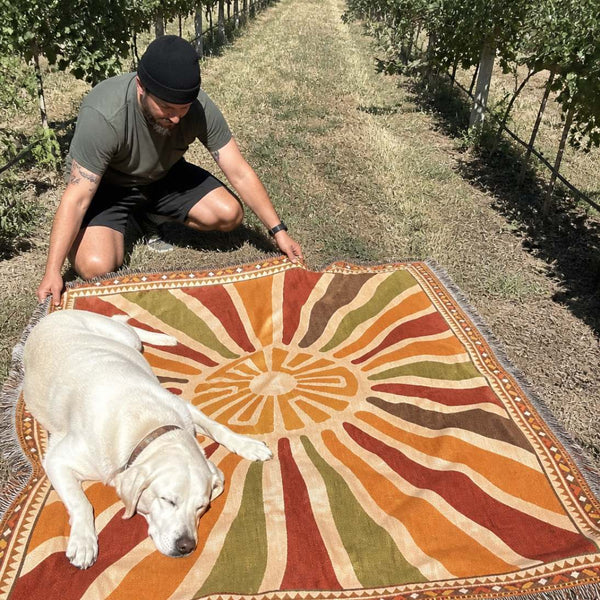
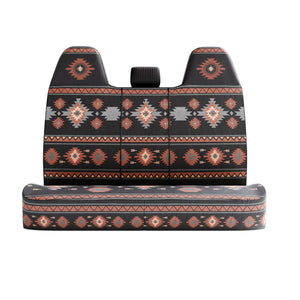
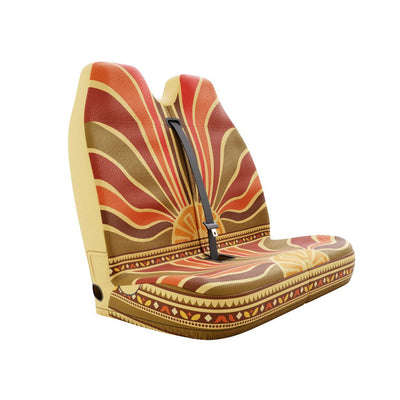
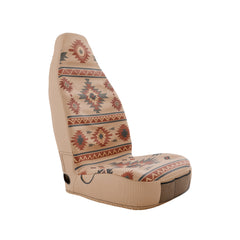
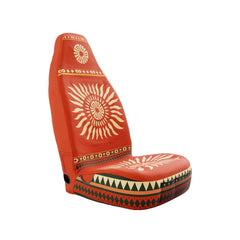
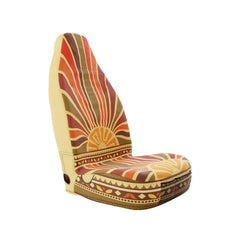
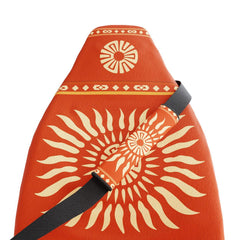
- Ties the interior together — matched with your seat covers, it's the difference between “covered seats” and a designed cabin.
Fit: one cover, most vehicles
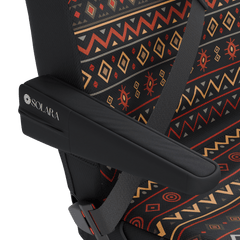
Our armrest covers stretch over most center console lids and bucket-seat armrests in cars, vans, campers, SUVs and trucks — elastic fit, no clips or tools, on in seconds. Colors are chosen to pair with the seat cover range: Midnight black for dark prints, Canyon brown for terracotta tones, Stardust navy, Saffron orange and Mari Gold yellow for the warm patterns — each product page lists which prints it pairs with.
Care
Waterproof against coffee-cup drips and armrest-cupholder accidents; cold machine wash when needed, same as everything we make (wash guide). If you're doing the interior properly, the order is: seat covers first, belt sleeves second, armrest last — the three surfaces you actually touch every drive.


