














Most seat cover buying mistakes are made in the first 30 seconds of shopping. People click the cheapest option, skip the airbag-compatibility check, ignore configuration, or pick a pattern that looks wrong on their car. The consequence: covers that don't fit, don't last, or look bad. This guide walks through the 5 mistakes most buyers make, and the 5-step process for picking covers that fit, last, and look intentional.
The 5 mistakes most people make
Mistake 1: Picking by price alone
Cheap covers (under $40 per seat) are usually false economy. They fit poorly, fade in 6 months, and need replacement just as you've gotten used to them. Mid-range covers ($60–$100 per seat) last 24+ months.
Cost per month of life:
-
$30 cheap cover lasting 6 months = $5/month
-
$65 mid-range cover lasting 24 months = $2.70/month
-
$250 custom cover lasting 60+ months = $4.20/month
Mid-range universal-fit is the value sweet spot.
Mistake 2: Skipping airbag compatibility
Every modern car (1998+) has side airbags in the front seat bolsters. Covers without engineered seams can prevent the airbag from deploying properly in a crash.
This is not optional. Verify the seller explicitly states airbag compatibility. If they don't, don't buy.
Mistake 3: Ignoring configuration
Buying covers without thinking about your specific seat configuration leads to bunching, gaps, or returns.
Configurations to think through:
-
Individual seats vs. bench seats
-
60/40 split vs. one-piece back seat
-
Removable headrests vs. one-piece (Tesla)
-
3rd-row vs. 2-row
-
Integrated booster vs. standard back seat
A 5-second check before buying prevents most fit issues.
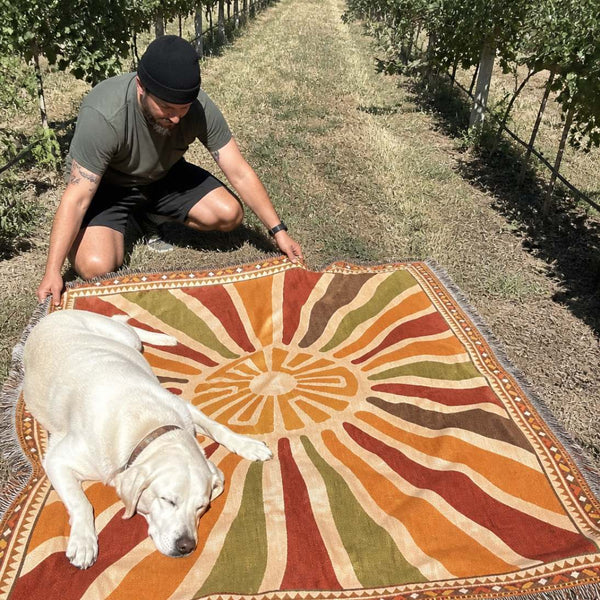
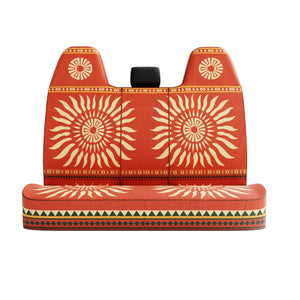
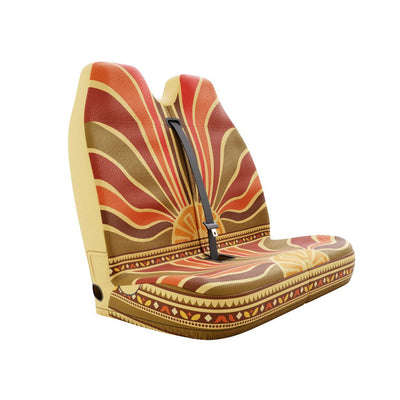
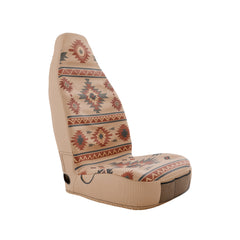
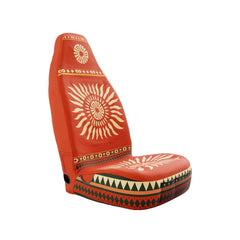
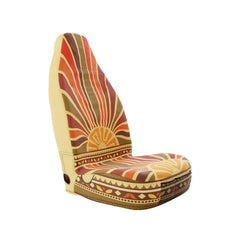
Mistake 4: Choosing the wrong pattern for the car
A bold pattern on a conservative car (Camry XLE, BMW 3 Series, Lexus ES) can look juvenile. A modern minimalist cover on a vintage car (1989 Wrangler, 1994 4Runner) looks like a clash.
Pattern should fit the car's era and aesthetic. See our boho design guide for pairing logic.
Mistake 5: Skipping the refund policy
Even with universal fit, a cover occasionally won't suit a specific configuration. Without a clear return policy, you're stuck.
Always check: how many days you have, whether unused covers that don't fit can come back, and who pays return shipping.
Step 1: Decide universal vs. custom
This is your first major decision. Most buyers are universal, but check our universal vs. custom guide for the full decision tree.
Choose universal if:
-
Daily driver, family use, dogs, surfing, vanlife
-
Budget under $400 for the whole interior
-
You want fast installation
-
Your car is a normal sedan, SUV or truck (most are)
Choose custom if:
-
Show car or restoration
-
Race seats or unusual seat geometry
-
Budget $1,500+
-
Appearance is critical
Step 2: Material choice
Five common materials. Each has trade-offs.
Heavy Duty waterproof-coated fabric (Solara's choice)
-
✓ Waterproof coating, machine-washable, made for daily use
-
✓ Made for daily use
-
✓ Mid-weight, comfortable
-
✗ Higher initial cost than budget polyester
Best for: lifestyle use (vanlife, dogs, families), daily driving, mid-budget
Standard polyester (budget)
-
✓ Cheap
-
✗ Fades in 6 months, water-resistant only, lower wash cycle tolerance
-
✗ Lifespan 12–18 months
Best for: short-term protection, fleet vehicles, minimal budget
Faux leather (PU/PVC)
-
✓ Looks premium initially, easy wipe-clean
-
✗ Cracks and peels in 18–36 months, sticky in summer heat, not breathable
-
✗ Looks worse than the stock seat once it cracks
Best for: rare cases, show cars where the leather aesthetic matters; otherwise avoid (see our faux leather guide)
Heavy-duty canvas
-
✓ Tough, waterproof, utilitarian
-
✗ Doesn't stretch (fits only well-matched seats), hot in summer
-
✗ Aesthetic limited to workwear vibe
Best for: work trucks, fleet vehicles, owners prioritizing durability over comfort
Neoprene (wetsuit-style)
-
✓ Excellent water exposure, snug fit
-
✗ Hot in summer, doesn't breathe, limited pattern variety
-
✗ Looks "athletic" rather than intentional
Best for: dedicated water-exposure vehicles (boats, fishing trucks)
Step 3: Airbag compatibility, how to verify
Three checks:
Check 1: Seller explicitly states airbag compatibility on the product page or FAQ.
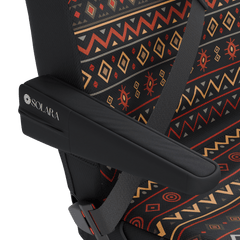
Check 2: Cover has visible engineered seam at the bolster (designed to release on deployment).
Check 3: Manufacturer is reputable, Solara, Coverado, established brands. Avoid no-name Amazon sellers without compatibility statements.
Skip any cover that fails these three checks. Side airbag is the most common safety system in modern cars; covers that block deployment are dangerous.
Step 4: Pattern and aesthetic considerations
Pattern affects:
-
How the cover looks against your car's existing interior
-
How well it hides stains, hair, and dirt
-
Resale value (neutrals retain better than bold patterns)
-
Your daily satisfaction with the look
Pairing logic:
|
Car interior |
Best pattern types |
|
Black (cloth or leather) |
Sand, Indigo, Stone Grey |
|
Gray cloth |
Stone Grey, Sand, Luna |
|
Beige leather |
Stone Grey, Clay, Sierra |
|
White (Tesla) |
Stone Grey, Indigo |
|
Brown leather |
Sand, Sierra, Clay |
For hiding mess (kids, dogs, dirt):
-
Sand (warm beige)
-
Clay (deep earth brown)
-
Indigo (deep blue)
-
Luna (boho geometric)
For aesthetic distinction:
-
Sierra (vintage geometric)
-
Mana (rich pattern)
-
Indigo (bold tribal)
For maximum resale value:
-
Stone Grey (cool gray, the universal neutral)
Step 5: Configuration (single, double, full set)
Match configuration to your seats:
2-seat front pair: standard for most owners. 2 single covers.
4-seat sedan: 2 fronts + 1 back seat (60/40 or one-piece).
5-seat SUV/crossover: 2 fronts + back seat split.
7-seat 3-row SUV/van: 2 fronts + middle row split + 3rd row split or singles.
Truck with bench front: check the size guide first. Our covers need seats with headrests; a full bench without them needs a bench-specific cover.
Convertible / 2-door: 2 fronts + small back seat.
Vanlife conversion: 2 fronts (standard); rear depends on conversion layout.
When in doubt, buying seat by seat (Solara's approach) lets you mix and match; a pre-bundled full set is simpler if it matches your car exactly.
Where to buy: brand reputation markers
Three brand-quality signals:
Signal 1: Trustpilot or Google reviews, 100+ at 4.5+ stars. Below this, you're guessing.
Signal 2: Refund policy clearly stated. The return window, who pays return shipping and how fast refunds arrive should all be spelled out.
Signal 3: Specific compatibility statements. A size guide or a list of seat types a cover does and doesn't suit beats a vague "fits everything."
Avoid:
-
Amazon-only brands with under 100 reviews
-
Sellers without explicit airbag compatibility statements
-
Anyone whose return policy is "no returns once installed"
Returns: what good looks like
The return policy is your safety net. A good one spells out:
-
How many days you have from delivery
-
Whether unused covers that don't fit can come back
-
Who pays for return shipping
-
How quickly the refund is issued after the return arrives
Anything less clear, and you're betting the cover fits perfectly the first time. For reference, Solara's terms: 14 days from delivery for unused covers, return shipping paid by you, and a refund within 5–8 business days of receiving the return.
The 2026 seat cover recommendation matrix
|
Use case |
Pick |
Covers |
|
Daily driver sedan |
Solara Stone Grey front pair |
2 single covers |
|
Family vehicle (kids, dogs) |
Solara Indigo full set |
2 single covers + back seat cover |
|
Vanlife / surfer |
Solara Stone Grey or Sand front pair |
2 single covers |
|
Project car restoration |
Solara Sand or Sierra front pair |
2 single covers |
|
Tesla owner |
Solara Stone Grey front pair |
2 single covers |
|
Truck with bench |
Check the size guide first |
Seats with headrests only |
|
Show car |
Custom-fit (CalTrend) |
$1,000+ |
|
Work fleet |
Heavy-duty canvas |
$80/seat |
FAQ
How often should I replace seat covers?
Solara's Heavy Duty fabric is made for daily use. Replace a cover when the fabric shows wear, fading, or repeated stains.
Can I install covers myself?
Universal: yes, under a minute per seat. Custom: yes but plan 30 minutes per seat.
Do covers void my car's warranty?
No. Aftermarket seat covers don't affect manufacturer warranty.
Can I wash covers in the washing machine?
Yes for Solara and similar quality brands. Cold water, gentle cycle, mild detergent, air dry. See our washing guide.
Will covers affect my car's interior temperature?
Minimally. Mid-weight fabric covers don't change cabin temperature significantly. Lighter colors keep seats cooler in sun.
Do I need different covers for different seasons?
No. Quality universal covers work year-round.
What if my partner and I disagree on pattern?
Solara's modular approach lets you mix patterns across seats. Front passenger and back seat can have different patterns if needed.
Verdict
The best seat covers for 2026 are universal-fit, Heavy Duty waterproof-coated fabric, airbag-friendly side seams, with a clear return policy. For most buyers, Solara's Stone Grey or Sand on the front seats is the right answer. For those wanting more pattern, Indigo or Luna, with a matching back seat cover in Indigo. For show cars, custom-fit alternatives.
Avoid: cheap polyester (under $40), faux leather (cracks), no-name Amazon sellers (no compatibility statement), and any cover without an airbag-compatible engineered seam.
The investment math: $250 covers protect ~$2,000+ of seat resale value over 3 years. Best-leverage interior protection you can buy.


