







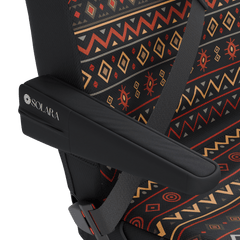


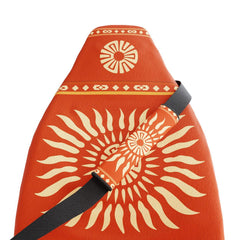



Blanket shopping is rigged toward fluff — the plush thing feels amazing for the eight seconds of the in-store squeeze, so plush wins the cart. But squeeze-tests measure the wrong decade. Three winters later the fleece is pilled, the chunky knit has snagged into abstraction, and the woven throw — the one that felt merely substantial in the store — looks exactly like it did on day one. Structure beats fluff on every timescale longer than a commercial.
What weaving actually buys
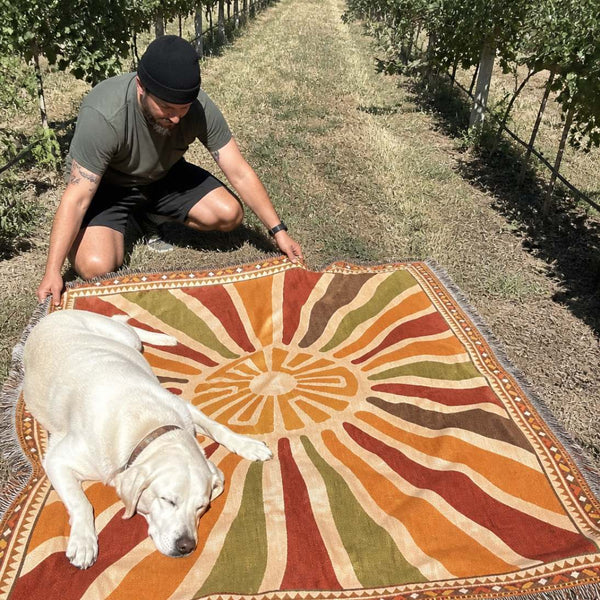
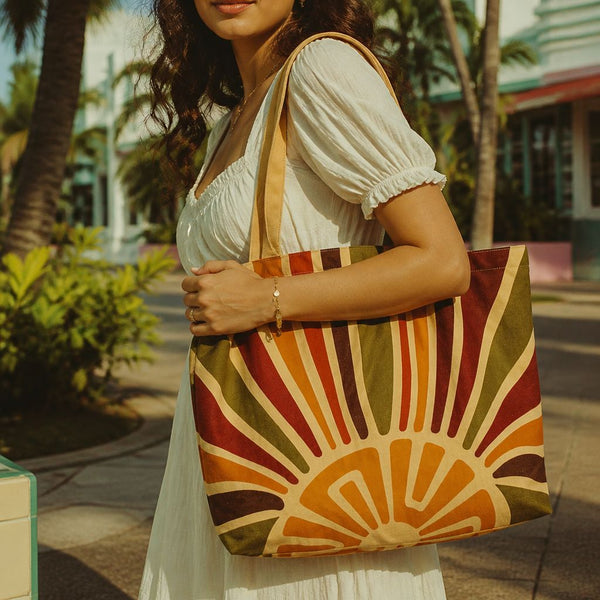
A woven throw has no pile to pill, no loops to snag, no nap to crush flat — the three deaths that claim every fluffy blanket. Pattern is woven through the cloth as structure (the jacquard mechanics), so it can't crack or peel like prints. And the flat face is why woven throws alone hold dual citizenship: sofa-respectable indoors, ground-capable outdoors, because there's no pile for the outdoors to move into.
The four-season argument
Fluff insulates — which is to say, it has one season. Woven cotton breathes: summer-night weight on its own, winter warmth layered over the duvet, and the year-round sofa default in between. One blanket covering twelve months beats four blankets covering three each, in money, closet space and laundry logic.
Spotting a true weave
Flip it — a genuine weave shows the pattern's negative on the back; a print shows pale fabric. Check the fringe — woven fringe is the warp threads themselves, not sewn-on trim. Feel for density — our jacquards run about a kilo at 130×180, the mass that makes the fold-for-padding trick and wind-resistant beach duty possible. Then wash it cold and watch nothing happen (the routine) — the twelve-pattern collection is built on exactly this argument.


